
FrontendPublished on 4 min read
React 19.2: New Features, Enhanced DevTools, and a Smooth Upgrade Path

Divyarajsinh ValaTechnical Project Manager
On this page
React continues its rapid evolution with React 19.2, released on October 1, 2025. This update focuses on practical developer ergonomics, performance, and tooling enhancements — all without introducing breaking changes that disrupt existing codebases. It’s a confident continuation of the React 19 series, sharpening both core APIs and the developer experience
What’s in React 19.2?
React 19.2 doesn’t reinvent the wheel — instead, it refines it. The emphasis is on smarter rendering patterns, better tooling feedback, smoother server-side workflows, and more predictable effect handling. Here’s a breakdown of what’s new and notable:
1. <Activity /> — Smarter UI Management
- One of the standout additions in React 19.2 is the new
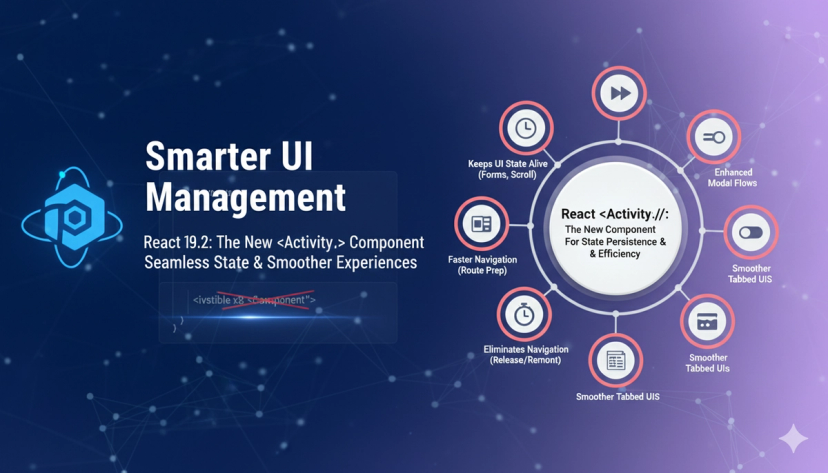
<Activity />component. This API lets you wrap parts of the UI into activities that can stay rendered but be hidden from view without unmounting. Unlike the classic{isVisible && <Component />}pattern,<Activity mode="hidden">keeps the component’s state and effects intact — and defers updates until React has idle time.
Why this matters
- Keeps UI state (like form inputs or scroll positions) alive when parts of the UI are toggled.
- Enables background preparation of routes or UI regions for faster navigation.
- Eliminates unnecessary unmounting/remounting cycles that can cause jank.
This opens up smoother experiences for tabbed interfaces, modal flows, and dynamic UIs where component state persistence matters.
2. useEffectEvent — Better Effect Patterns
- React’s classic
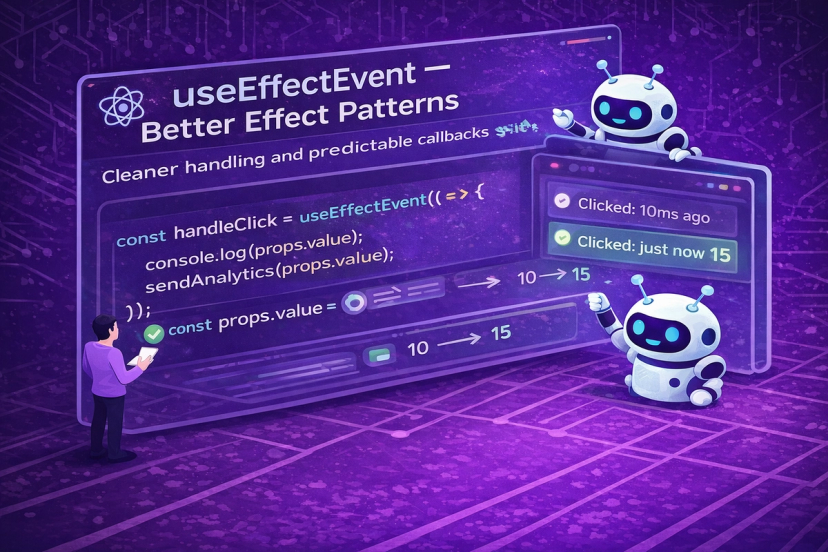
useEffecthas long been powerful but sometimes tricky: effects re-run when any dependency changes, often even when you only wanted an event handler with fresh state. EnteruseEffectEvent, a hook that lets you define stable event callbacks that always see up-to-date props/state without triggering unnecessary re-run.
Benefits
- Cleaner event handling with fewer bugs related to stale closures.
- Reduces reliance on disabling linter rules for effect dependencies.
- Makes external subscriptions and event callbacks more predictable
3. cacheSignal — Reactive Caching Primitive
- React 19.2 also introduces
cacheSignal, a low-level primitive that tracks cache lifetimes and invalidation. This is especially useful with React Server Components or complex data fetching patterns: it lets React notify you when a cached entry expires, enabling more efficient resource cleanup/refresh logic
4. DevTools: Performance Tracks & Improved Insight
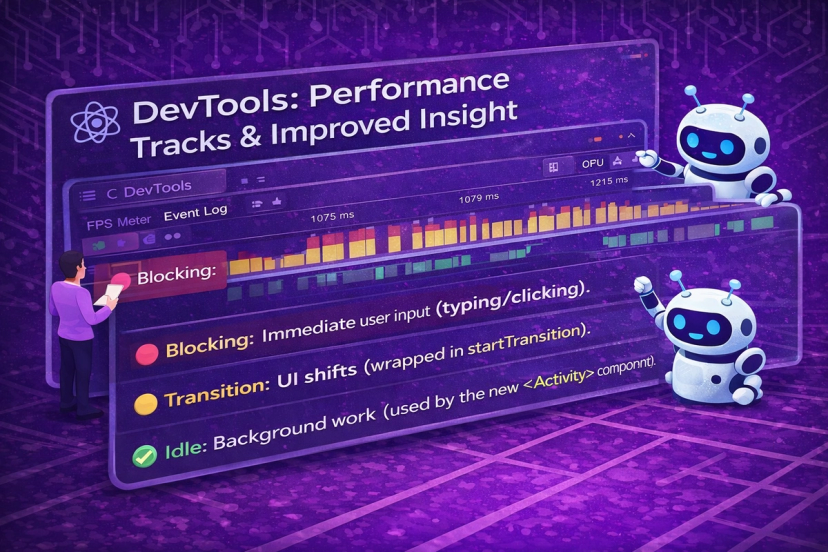
React 19.2 enhances React DevTools with Performance Tracks — new profiling visualizations inside Chrome DevTools that give you deeper insight into how React schedules and executes work:
You can now see work categorized by priority lanes:
- Blocking: Immediate user input (typing/clicking).
- Transition: UI shifts (wrapped in
startTransition). - Idle: Background work (used by the new
<Activity>component).
5. Stability, Security, and SSR
React 19.2 isn't just about features; it's about making the web faster and safer.
- Zero Breaking Changes: If you are on React 19, this is a drop-in replacement.
- Partial Pre-Rendering (PPR): This feature is now more stable, allowing you to ship a static HTML shell and "resume" dynamic rendering later.
- Security Alert: Note that shortly after the 19.2.0 release, the team released React 19.2.3 to patch a critical vulnerability in Server Components (CVE-2025-55182). Always ensure you are on the latest patch version (19.2.x).
Developer Experience Enhancements
While React 19.2 introduces new capabilities, it avoids breaking changes. The core API surface remains consistent, and existing apps will continue to run without refactors — a major win for teams juggling big codebases or long-term projects.
There are a few tooling considerations:
- ESLint plugin for React Hooks (v6) has updated rules that can encourage better patterns with
useEffectEventand other hooks. Adjusting lint configs might be needed during upgrade. - The default prefix for
useIdhas changed slightly for better compatibility with CSS selectors and modern naming conventions — but this doesn’t usually break apps
No Breaking Changes — What That Means for You
Perhaps the most welcome part of React 19.2 is that it introduces powerful tools without forcing API changes or disruptive migrations. That means:
- You can adopt new features at your own pace.
- Large teams can upgrade with minimal regression risk.
- Existing patterns keep working while offering paths toward better performance and clarity.
This approach reflects a mature release cycle where incremental improvements add value without friction.
Why React 19.2 Matters
React 19.2 feels like a meaningful iteration in the framework’s evolution — not just a maintenance release, but a practical one:
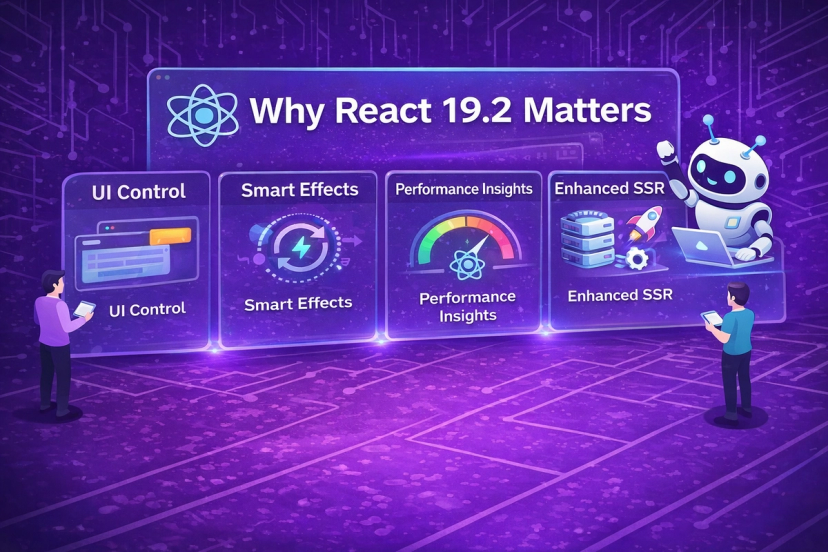
- Better control over where and when parts of your UI render.
- Smarter event and effect handling that aligns with modern patterns.
- Stronger visibility into React’s scheduler and component behavior.
- Enhanced SSR tooling that enables hybrid static and dynamic rendering workflows.
For teams building large applications or frameworks (like Next.js, Remix, or internal platforms), these incremental yet powerful improvements translate to faster iteration cycles, fewer surprises, and more confidence in performance.
Summary Table: What's New?
| Feature | What it solves | Benefit |
|---|---|---|
| <Activity> | State loss vs. CPU waste | Backgrounding components safely |
| useEffectEvent | Unnecessary re-renders | Cleaner, more predictable hooks |
| cacheSignal | Stale cache cleanup | Aborts fetches when no longer needed |
| Scheduler Track | Opaque rendering logic | Visual "Priority Lanes" in DevTools |
Ready to Upgrade?
Upgrading is as simple as: npm install react@latest react-dom@latest
Pro Tip: To get the most out of the new hooks, make sure to also update your linter: npm install --save-dev eslint-plugin-react-hooks@latest
Final Thoughts
React 19.2 strikes a rare balance: adding depth without friction. You get meaningful APIs like <Activity /> and useEffectEvent, improved DevTools, and smoother SSR integration — all while keeping your existing apps intact. It’s exactly the kind of upgrade the community can adopt widely and confidently.
Whether you’re migrating now or planning incremental adoption later, React 19.2 sets a strong foundation for the future.
Written by

Divyarajsinh Vala
Technical Project Manager