
FrontendPublished on 3 min read
Is Frontend Dead? The Evolution You Can't Ignore

Bhim MridhaSr. AI Developer
On this page
The sentiment is everywhere: "Frontend is dead," "AI will replace UI developers," or "You must be Fullstack
to survive." But let's be clear: the field responsible for the entire user experience is not dying—it's shedding its old skin.
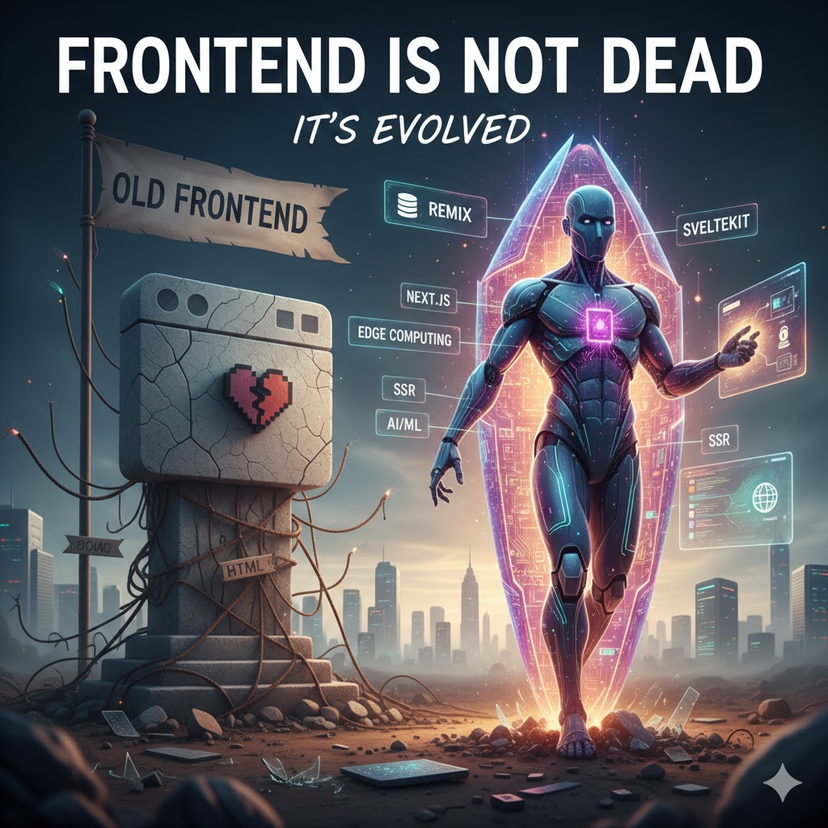
The traditional definition of a frontend developer, one who only "translates pixels into HTML and CSS" and relies on a separate backend team for everything else, is indeed becoming obsolete. The evolution is no longer about styling buttons; it's about owning the entire user experience system.
The Death of the "Old Frontend"
In the past, the boundary was simple:
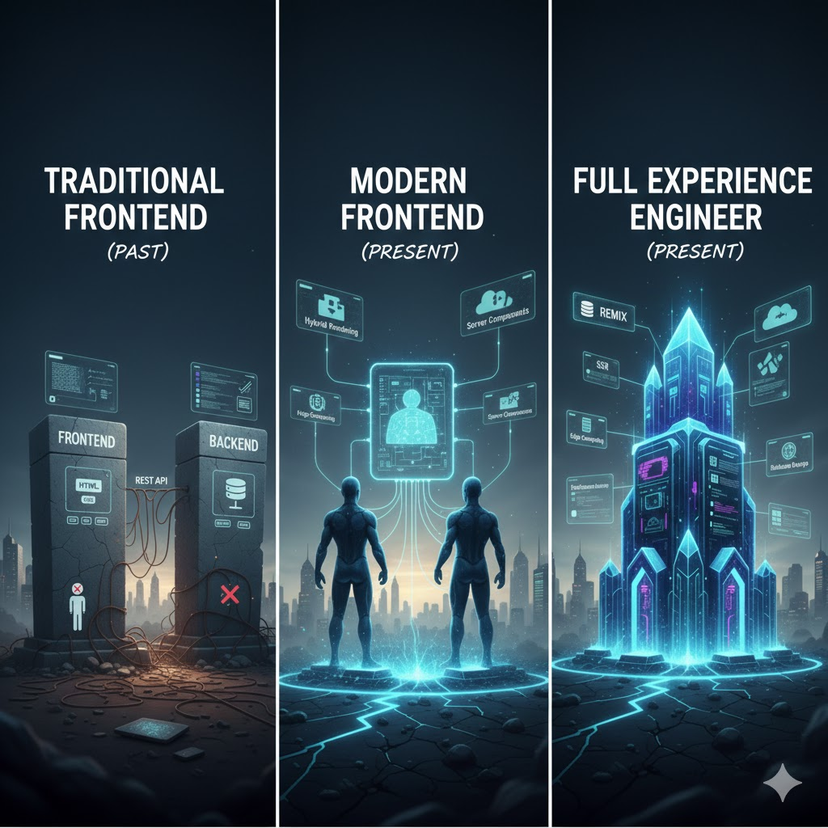
- Frontend: HTML for structure, CSS for style, and simple JavaScript for interactivity (DOM manipulation). Its main job was to present data fetched from a clear API endpoint.
- Backend: Managed the database, application logic, and provided the RESTful API.
This separation of concerns created friction: developers often waited for APIs, dealt with unnecessary data fetching overhead, and were limited in how they could optimize performance.
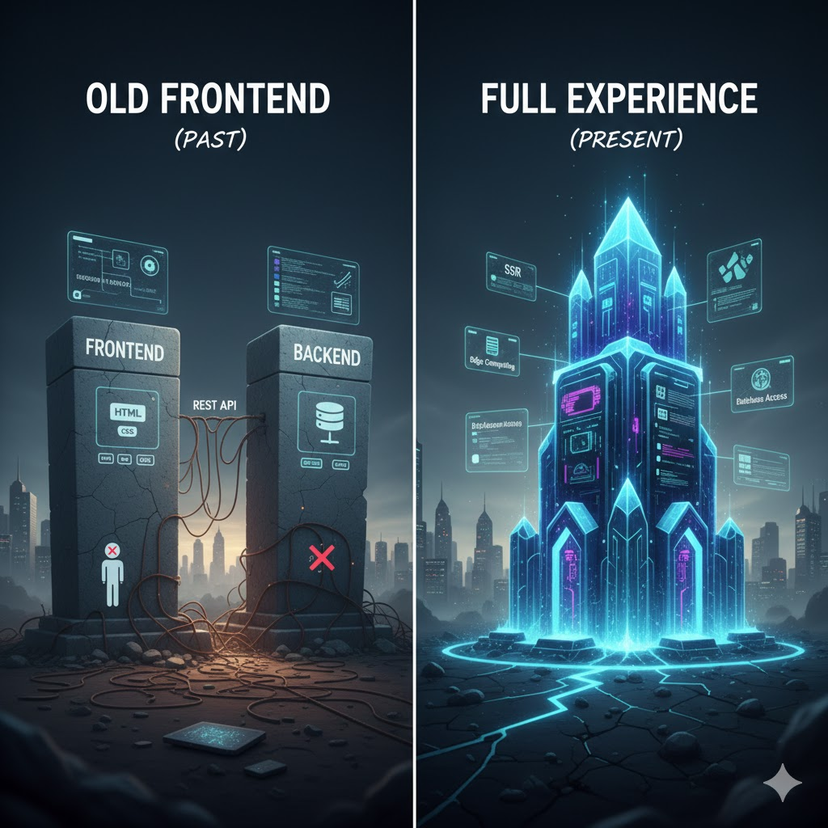
The "death" narrative stems from the fact that modern tools have fundamentally blurred this line.
The Rise of the Full Experience Engineer
The modern frontend engineer—or what we can call the Full Experience Engineer—now controls aspects previously exclusive to the backend, driven by powerful new frameworks and architectural patterns.
1. Server-Side Everything
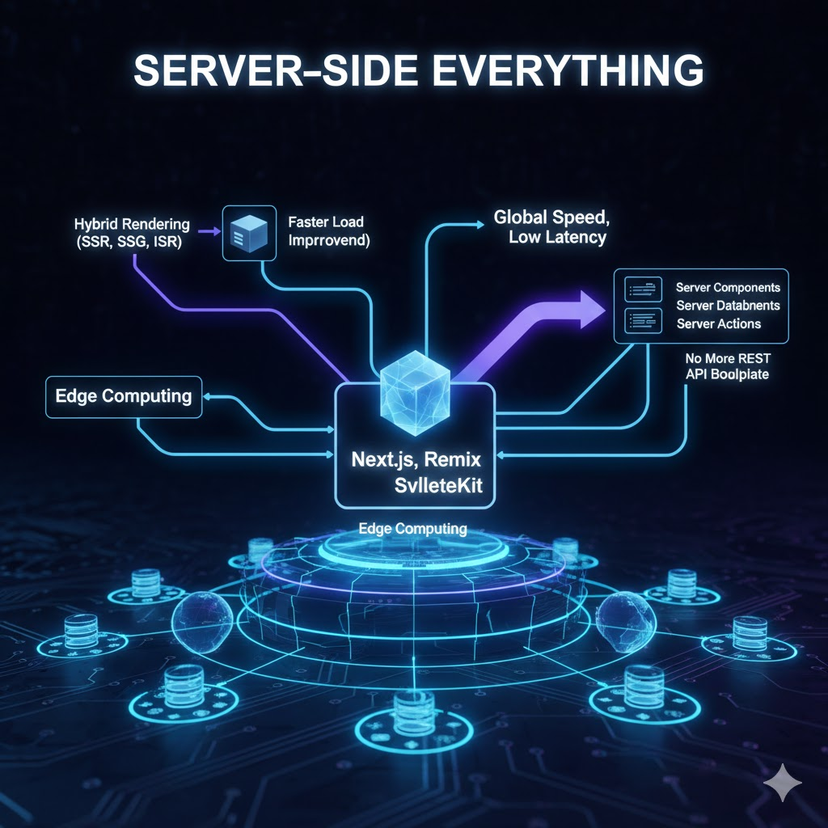
New meta-frameworks like Next.js, Remix, and SvelteKit are at the heart of this revolution. They allow developers to write code that runs on the server (or the edge) from within their "frontend" project.
- Hybrid Rendering (SSR, SSG, ISR): Techniques like Server-Side Rendering (SSR) and Incremental Static Regeneration (ISR) deliver pre-rendered HTML to the user, dramatically improving initial page load times and SEO. This shifts performance optimization from a purely client-side concern to a full-stack one.
- Edge Computing: Deploying logic to the "edge" (servers physically closer to the user) minimizes latency. Frontend code is now being executed globally for speed.
- Server Components/Actions: In ecosystems like React (with Server Components) and Remix (with Server Actions), frontend developers can call server-side functions and make database calls directly from a component, eliminating the need for a manually built REST API layer for simple operations. This drastically reduces boilerplate.
2. Full System Ownership
The scope of work has expanded from the browser tab to the entire infrastructure pipeline:
- Data Management: Frontend engineers now deeply manage server state using tools like React Query and SWR, handling caching, re-fetching, and optimistic UI updates, which were once more of a backend challenge.
- Performance Optimization: Beyond basic code splitting, performance now involves a deep understanding of Core Web Vitals, critical rendering paths, and network waterfalls. A 200kb library isn't just a poor choice; it's a measurable drop in conversion rates.
- Frontend DevOps: The modern developer is often responsible for CI/CD, deployment on serverless platforms (like Vercel or Netlify), and monitoring—tasks previously handled by dedicated DevOps teams.

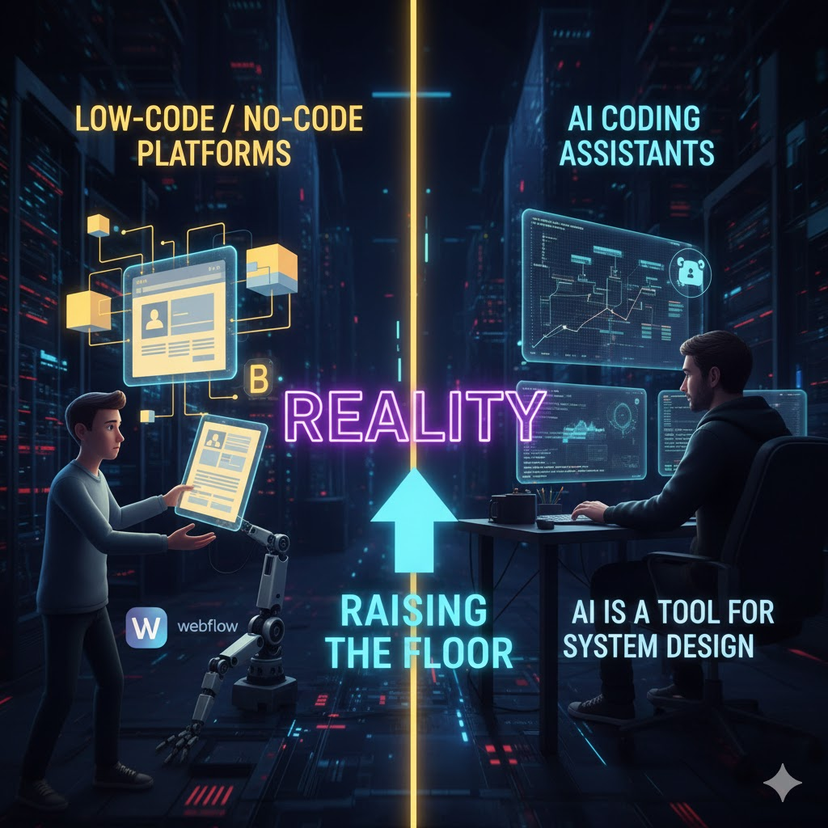
AI and the Low-Code/No-Code Threat
A significant driver of the "Frontend is dead" fear is the rise of AI and low-code/no-code platforms.
- Low-Code/No-Code: Platforms like Webflow or Bubble can easily handle simple brochure sites and standard CRUD (Create, Read, Update, Delete) applications. This has absorbed the "simpler" end of the market, reducing the demand for developers who only handle basic layout.
- AI Assistants (GitHub Copilot, etc.): AI excels at generating boilerplate, writing tests, and converting designs (e.g., Figma to code). This automates the most mechanical, repetitive tasks in a developer's day.
The Reality: AI and low-code are tools of acceleration, not total replacement. They are raising the floor for what is considered a valuable developer. The job is shifting from writing repetitive code to designing scalable, performant, and secure systems—a task AI cannot yet do reliably.
The New Frontend Mandate: Skills for Survival
Frontend isn't dead; it's evolved into a more sophisticated, high-value discipline. To thrive in this new landscape, a developer must:
- Embrace System Thinking: Understand the full data flow, from the database through the API, the rendering layer, and finally to the user's screen.
- Master Hybrid Frameworks: Proficiency in Next.js, SvelteKit, or Remix is becoming non-negotiable for building high-performance, complex applications.
- Prioritize Performance & Accessibility: These are no longer "nice-to-haves" but fundamental requirements. Developers must be fluent in tools for performance analysis and adherence to WCAG standards.
- Deepen Foundational Knowledge: The frameworks change, but TypeScript, solid JavaScript fundamentals, and advanced CSS (including modern features like container queries) are the stable base.
- Leverage AI Strategically: Integrate AI tools into your workflow to automate repetitive coding, freeing up your time for higher-level architectural and UX challenges.

Written by

Bhim Mridha
Sr. AI Developer