
Web DesignPublished on 5 min read
Mastering System Design: A Comprehensive Blueprint for Aspiring Architects

Bhim MridhaSr. AI Developer
On this page
System Design is arguably one of the most critical skills for senior software engineers, tech leads, and aspiring architects. It’s the art of defining the architecture, components, modules, interfaces, and data for a system to satisfy specified requirements. It moves beyond writing code; it's about thinking at scale, making trade-offs, and building robust, efficient, and maintainable systems.
This deep-dive guide provides a structured, multi-stage approach to help you master system design, transforming you from a code-slinger to a system architect.
Stage 1: The Foundational Pillar – Core Concepts
Before you can design a highly available distributed system, you must understand the fundamental building blocks. This stage is non-negotiable.
1. Computer Science & Networking Basics
A strong system design rests on a solid CS foundation.
- Data Structures and Algorithms (DSA): While not designing a new algorithm for every component, understanding the performance characteristics ($O(n)$ notation) of different data structures (Hashmaps, Tries, Heaps, Trees) is crucial for choosing the right tool for the job.
- Operating Systems (OS): Understand concepts like processes, threads, concurrency, deadlocks, and memory management. These impact the performance of any single server you build.
- Networking (The OSI Model and TCP/IP): You must be comfortable with the flow of data. What happens when you type a URL?
- DNS Resolution: How service names are mapped to IP addresses.
- Load Balancing: Different algorithms (Round Robin, Least Connection) and their impact.
- Protocols: HTTP, TCP, and UDP. Know the difference between a connection-oriented and connectionless protocol.
- Latency: Understand the factors contributing to network latency.
2. Distributed System Essentials
These concepts are the vocabulary of system design interviews and real-world architecture.
- Latency vs. Throughput: Know how to measure and optimize both. Latency is the time for a request to complete; throughput is the number of requests processed per unit time.
- Availability vs. Consistency (The CAP Theorem)
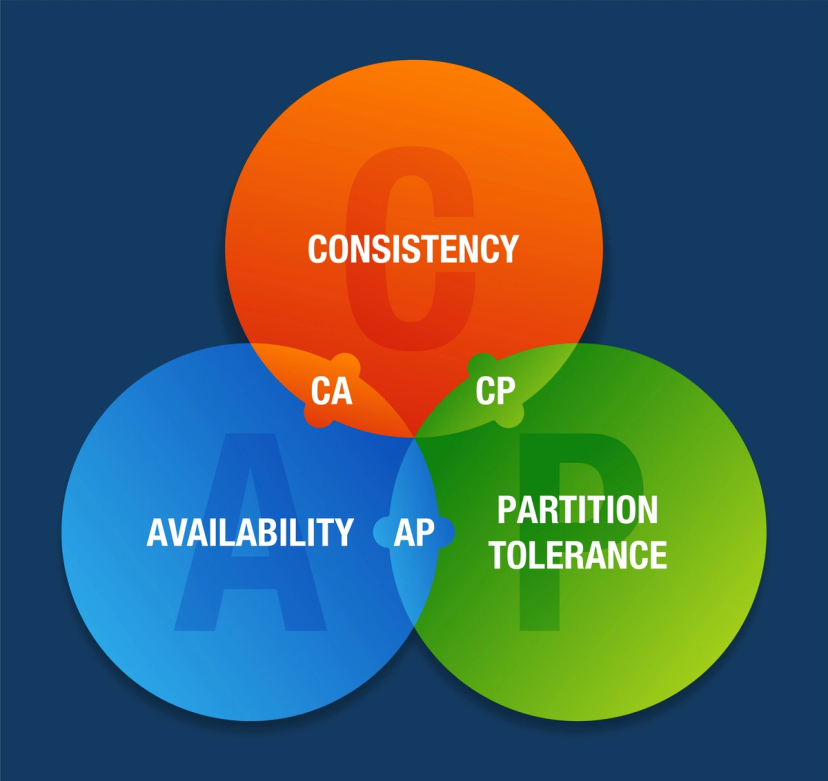
The core trade-off in distributed databases. You can only pick two: Consistency, Availability, or Partition Tolerance. Understand when to choose an AP system (like Cassandra) over a CP system (like HBase).
- Scalability:
- Vertical Scaling: Increasing the resources (CPU, RAM) of a single server.
- Horizontal Scaling (Sharding): Adding more servers to distribute the load. This is the foundation of modern web-scale systems.
- Reliability & Fault Tolerance: Designing for failure. What happens if a server dies? This involves redundancy and automatic failover.
- Caching: The secret sauce of performance.
- Levels: Browser, CDN, Application, Database.
- Strategies: Write-through, Write-back, Cache-aside.
Stage 2: The Practical Application – Building Blocks
This stage focuses on the components you'll use to build almost any large-scale system.
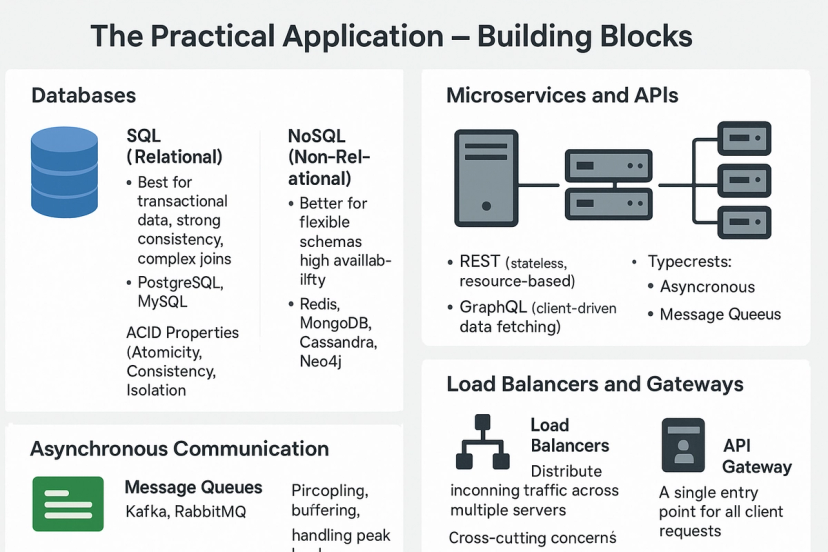
1. Databases
The choice of database dramatically shapes the system.
- SQL (Relational): Best for transactional data, strong consistency, and complex joins (e.g., PostgreSQL, MySQL).
- Key Concept: ACID Properties (Atomicity, Consistency, Isolation, Durability).
- NoSQL (Non-Relational): Better for flexible schemas, high availability, and horizontal scaling.
- Key Types: Key-Value Stores (Redis), Document Stores (MongoDB), Column-Family Stores (Cassandra), Graph Databases (Neo4j). Know when to use each.
- Database Scaling:
- Read Replicas: How to handle read-heavy workloads.
- Sharding (Horizontal Partitioning): How to distribute data across multiple servers based on a sharding key.
2. Microservices and APIs
Modern systems are composed of smaller, independent services.
- Monolith vs. Microservices: Understand the pros (simplicity) and cons (tight coupling) of a monolith versus the complexity and independence of microservices.
- API Design: Focus on REST (stateless, resource-based) and GraphQL (client-driven data fetching).
- Communication: Synchronous (HTTP/REST) vs. Asynchronous (Message Queues).
3. Asynchronous Communication
A powerful tool for decoupling services and handling background tasks.
- Message Queues (e.g., Kafka, RabbitMQ):
- Purpose: Decoupling, buffering, and handling peak loads.
- Concepts: Producers, Consumers, Topics/Queues.
- Task Queues (e.g., Celery): For offloading long-running, non-time-critical tasks (e.g., sending emails, processing video).
4. Load Balancers and Gateways
The entry point to your system.
- Load Balancers: Distribute incoming traffic across multiple servers to ensure no single server is overwhelmed.
- API Gateway: A single entry point for all client requests. Handles cross-cutting concerns like authentication, rate limiting, and request routing.
Stage 3: The Practice Arena – Design Studies
Theory is useless without application. This stage involves deep-diving into specific, famous designs.
1. The Standard System Design Template
Always follow a structured approach when designing a system.
- Understand the Requirements: Clarify functional (what the system must do) and non-functional (latency, availability, scale) requirements.
- Estimate: Calculate the required scale (QPS - Queries Per Second, Storage, Bandwidth). Example: How many users? How many writes per second?
- High-Level Design (HLD): Draft the main components (Client, Load Balancer, Web Servers, Database).
- Deep Dive (LLD): Detail specific components:
- Data Model/Schema: How data is stored.
- APIs: The contracts between components.
- Specific Mechanisms: Caching, Sharding, Message Queue details.
- Identify Bottlenecks and Trade-offs: Discuss where the design might fail and the key trade-offs made (e.g., prioritizing availability over strong consistency).
2. Case Study Analysis
Start by analyzing the designs of famous services. Use the above template.
- URL Shortener (TinyURL/Bitly): Focus on the data model, unique ID generation, and 301/302 redirects.
- News Feed (Facebook/Twitter): Focus on read-heavy versus write-heavy feeds and the use of Fanout (Fanout-on-Write vs. Fanout-on-Read).
- Distributed Chat System (WhatsApp/Slack): Focus on message delivery guarantees, persistent connections (WebSockets), and presence service.
- Rate Limiter: Focus on algorithms (Leaky Bucket, Token Bucket) and their distributed implementation (using Redis).
Stage 4: Continuous Growth – The Architect's Mindset
System design is a journey, not a destination. The landscape is constantly evolving.
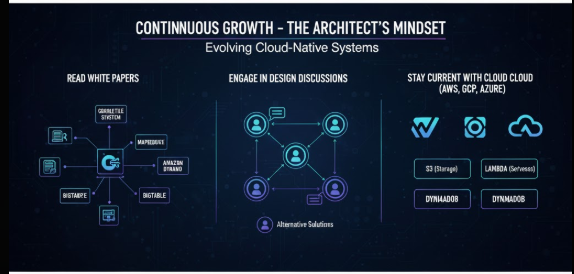
- Read White Papers: Dive into the original papers for technologies like Google File System (GFS), MapReduce, Amazon Dynamo, and BigTable. These are the foundations of modern cloud-native systems.
- Engage in Design Discussions: Participate in design reviews at work. Critique and understand why certain choices were made. Offer alternative solutions.
- Stay Current with Cloud (AWS, GCP, Azure): Modern system design often involves choosing and integrating managed cloud services (e.g., S3 for storage, Lambda for serverless, DynamoDB for NoSQL). Understanding their capabilities and limitations is key to rapid, scalable development.
Conclusion
- Mastering system design requires merging theoretical CS knowledge with practical, scalable architecture patterns. Start with the basics (Stage 1), build up your component knowledge (Stage 2), practice with real-world case studies (Stage 3), and cultivate a continuous learning mindset (Stage 4).
- The goal is not to memorize solutions but to develop a systematic way of tackling large, complex problems and articulating the necessary trade-offs to achieve a desired set of non-functional requirements. Start small, design a component, and then integrate it into a larger system.
Written by

Bhim Mridha
Sr. AI Developer