Reranking and Hybrid Search: Elevating RAG Quality Beyond Basic Retrieval

Vanilla RAG Hits a Quality Wall: Why More Chunks Aren't Always Better
Many RAG (Retrieval Augmented Generation) systems quickly encounter a ceiling in performance: simply increasing the number of retrieved documents or expanding the context window of the Large Language Model often yields diminishing returns, or worse, degrades accuracy. The core issue isn't always a lack of information, but rather the signal-to-noise ratio within the retrieved context. A basic vector search, while powerful for semantic similarity, can pull in tangentially related but ultimately irrelevant chunks, overwhelming the LLM and leading to the 'lost in the middle' phenomenon where crucial information is overlooked.
Consider a scenario where a user asks about 'optimal maintenance schedules for industrial turbines.' A pure vector search might retrieve documents discussing turbine design, energy efficiency, or even unrelated industrial equipment, alongside the relevant maintenance guides. If the top-k results are dominated by these less pertinent documents, the LLM struggles to synthesize an accurate and concise answer, potentially fabricating details or missing key procedural steps. This common bottleneck suggests that the initial retrieval phase, while foundational, is rarely sufficient for production-grade RAG.
The assumption that 'more data equals better answers' is a pitfall. LLMs have a finite attention span and a tendency to prioritize information at the beginning or end of their context window. Injecting a large, uncurated set of documents forces the LLM to act as its own retriever and filter, a task it performs less efficiently and reliably than specialized information retrieval techniques. Addressing this requires a more sophisticated approach to context construction, moving beyond simple similarity search to actively refine and prioritize information before it ever reaches the LLM.
Reranking: Refining Initial Search Results for Relevance
Reranking is a critical step that significantly improves the precision of retrieved documents. Instead of directly passing the initial top-k documents from a vector or keyword search to the LLM, a smaller, more powerful model (the reranker) re-evaluates these documents based on their relevance to the original query. This process reorders the results, pushing the most semantically pertinent documents to the top, even if their initial vector similarity score was not the highest. Tools like Cohere Rerank or the BGE reranker models exemplify this capability, offering substantial gains.
The mechanism behind reranking often involves a cross-encoder architecture. Unlike bi-encoders used in initial vector search (which embed query and document independently), cross-encoders take both the query and a document pair as input, allowing for a deeper, more nuanced interaction and comparison. This joint embedding provides a richer understanding of the contextual relationship, leading to a more accurate relevance score. While computationally more expensive than initial retrieval, reranking operates on a much smaller subset of documents (e.g., the top 50-100 from initial retrieval), making its cost manageable.
Implementing reranking can transform a mediocre RAG system into a highly effective one. For example, a legal research RAG system might initially retrieve hundreds of case law excerpts. A reranker can then pinpoint the handful of most directly relevant precedents, significantly reducing the LLM's workload and improving the accuracy of legal summaries. This step directly combats the 'lost in the middle' problem by ensuring that the LLM receives a highly concentrated dose of relevant information, improving answer quality and reducing the likelihood of hallucination.
Beyond Vectors: The Power of Hybrid Search
Pure vector search, while excellent for capturing semantic meaning, struggles with exact keyword matches, new entities, or very specific identifier lookups. Conversely, traditional keyword search (like BM25) excels at these exact matches but falls short on semantic understanding, often missing relevant documents that don't share exact lexical overlap. Hybrid search combines these strengths, leveraging both sparse (keyword-based) and dense (vector-based) retrieval methods to achieve a more comprehensive and robust initial set of results.
A common hybrid approach involves performing both a sparse search (e.g., using Elasticsearch or a custom BM25 implementation) and a dense vector search (e.g., using pgvector, Pinecone, or Milvus). The results from both methods are then combined. Simple concatenation is an option, but more sophisticated fusion techniques are often employed. Reciprocal Rank Fusion (RRF) is a popular method that merges ranked lists from different retrieval methods into a single, combined ranked list, giving higher preference to documents that appear high in multiple lists.
The immediate benefit of hybrid search is increased recall, particularly in diverse datasets. Imagine a RAG system for an internal IT knowledge base. A user might search for 'how to configure VPN for Mac M2.' A vector search might prioritize documents about VPNs generally, while a keyword search might miss 'M2' if it's a new chip, but find 'Mac VPN configuration.' Hybrid search ensures both lexical and semantic relevance are considered, providing a richer pool of candidates for the subsequent reranking stage and reducing the chance of missing crucial information.
Building a Hybrid Retrieval Pipeline: Steps and Tools
Constructing a robust hybrid retrieval pipeline involves several distinct stages, each requiring careful consideration of tools and configurations. The first step is to establish separate indexing mechanisms for sparse and dense retrieval. For sparse retrieval, traditional search engines like Elasticsearch, Solr, or even a simple inverted index built with Lucene can be used. For dense retrieval, vector databases such as Pinecone, Milvus, Qdrant, Weaviate, or even PostgreSQL with the pgvector extension are excellent choices for storing and querying embeddings.
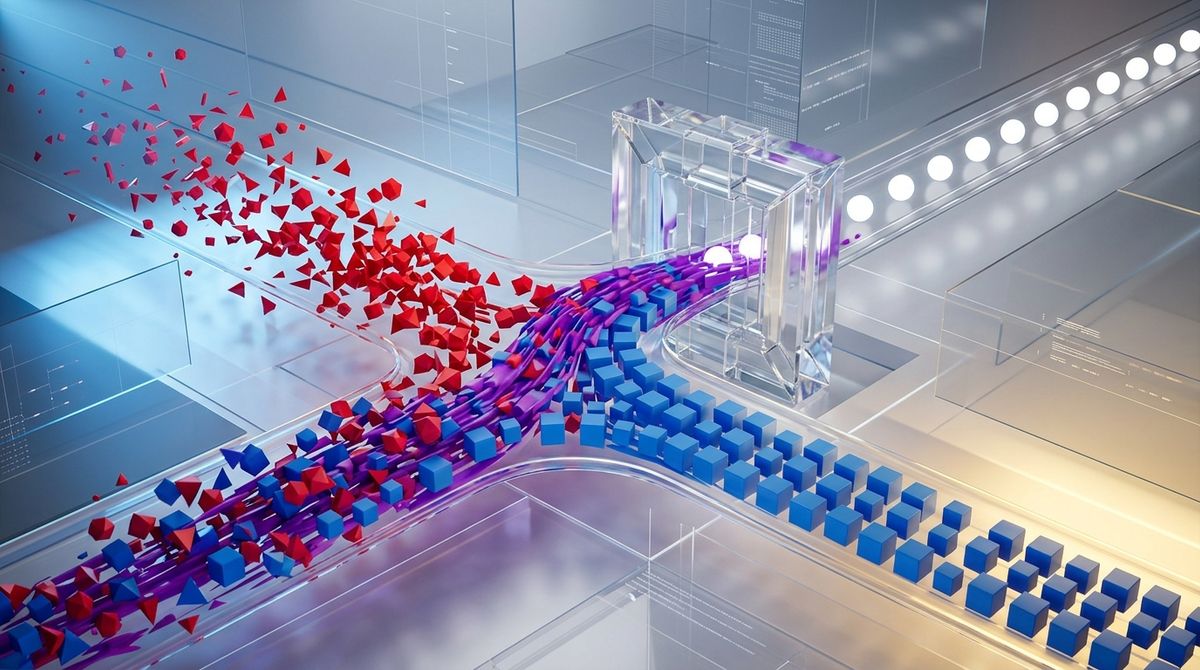
Once indexed, the retrieval process begins by executing both a sparse and a dense query in parallel. The sparse query uses keywords derived from the user's input, while the dense query uses an embedding of the user's input to find semantically similar document chunks. The results from these two distinct retrieval methods, each a ranked list of document IDs and scores, are then passed to a fusion layer. This layer is responsible for combining these lists into a single, consolidated ranked list.
The final, crucial step in this pipeline is reranking. The fused list of documents (typically the top 50-100) is then fed into a reranker model. This model re-evaluates each document's relevance to the original query, producing a final, highly optimized ranked list of documents. These top-N (e.g., 5-10) documents are then used as context for the LLM. This multi-stage process ensures that the LLM receives the most relevant, high-quality information, maximizing its ability to generate accurate and helpful responses.
Key considerations for building this pipeline include:
- Choose appropriate embedding models (e.g., OpenAI, Cohere, BGE) for dense retrieval and reranking.
- Select a robust vector database that scales with your data volume and query traffic.
- Implement a reliable fusion algorithm like Reciprocal Rank Fusion (RRF) for combining sparse and dense results.
- Monitor latency and cost implications at each stage, especially for API-based rerankers.
- Establish a clear document chunking strategy that balances semantic coherence with LLM context window limits.
Navigating Trade-offs: Latency, Cost, and System Complexity
While reranking and hybrid search dramatically improve RAG quality, they introduce new trade-offs, primarily in latency, cost, and system complexity. Each additional step in the retrieval pipeline—sparse search, dense search, fusion, and reranking—adds overhead. A simple vector search might return results in tens of milliseconds, but a full hybrid search with reranking could easily push response times into the hundreds of milliseconds, or even seconds for very large reranker models or high-volume traffic.
Cost is another significant factor. Running multiple retrieval queries incurs higher compute costs, especially if using managed vector database services or external API-based reranking services like Cohere. Larger, more powerful reranker models, while offering superior relevance, are generally more expensive per inference. Organizations must carefully balance the desired quality increase against the budget allocated for inference and infrastructure, making cost-per-query an important metric to track.
Finally, system complexity increases. Managing separate indexes for sparse and dense retrieval, implementing fusion logic, and integrating a reranker model adds more moving parts to the architecture. This means more services to monitor, more potential points of failure, and a higher operational burden for engineering teams. The benefits often outweigh these challenges for mission-critical applications, but it requires a mature DevOps practice and careful system design to ensure reliability and maintainability.
Advanced Reranking for Nuanced Semantic Understanding
Beyond standard cross-encoder rerankers, advanced techniques can further refine the relevance of retrieved documents. One such approach is multi-stage reranking, where an initial, faster reranker filters a broad set of candidates, and a second, more powerful (and often slower) reranker then meticulously re-evaluates the top few dozen. This hierarchical approach balances performance with precision, ensuring that the most critical documents receive the deepest semantic analysis without incurring excessive latency for the entire initial retrieval set.
Another powerful strategy involves query rewriting or expansion before the reranking phase. Instead of reranking based solely on the original user query, an LLM can be used to generate several reformulations or to expand the query with synonyms and related concepts. Each of these expanded queries can then be used to score documents, and the highest score across all query variations is used for reranking. This technique helps capture user intent more comprehensively, especially for ambiguous or terse queries, leading to better-matched documents.
Domain-specific fine-tuning of rerankers offers the highest potential for specialized applications. By training a reranker model on a dataset of query-document pairs explicitly labeled for relevance within a specific industry or knowledge domain, organizations can achieve superior performance compared to general-purpose models. While resource-intensive, this investment pays dividends in highly specialized fields like medical research, legal discovery, or proprietary technical documentation, where subtle semantic distinctions are paramount for accuracy.
When to Implement Reranking and Hybrid Search
The decision to implement reranking and hybrid search should be driven by measurable performance gaps in your existing RAG system and the specific requirements of your application. If users frequently report irrelevant answers, or if your LLM often hallucinates due to poor context, these techniques are strong candidates. They are particularly valuable for applications where accuracy is paramount, such as customer support bots handling complex product queries, internal knowledge management systems for critical operational procedures, or research tools summarizing dense technical literature.
Consider your dataset characteristics. If your knowledge base contains a mix of highly structured data (e.g., product IDs, specific codes) and unstructured text with rich semantic content, hybrid search is almost certainly beneficial. If your documents are dense and semantically similar, making it hard for initial vector search to differentiate, then reranking becomes essential. The investment in these techniques is justified when the cost of incorrect or low-quality answers significantly impacts user trust, operational efficiency, or business outcomes.
Evaluate your current RAG performance using metrics like precision@k, recall@k, and human evaluation of answer quality. If these metrics are not meeting your target KPIs, it's time to look beyond basic retrieval. The complexity and cost trade-offs are usually acceptable when the alternative is a RAG system that fails to deliver reliable value. Start with a clear understanding of the 'why' behind the implementation, rather than simply adopting new technologies for their own sake.
- Your RAG system suffers from low precision or high hallucination rates.
- Users complain about irrelevant answers or a failure to find specific information.
- Your knowledge base includes both keyword-rich and semantically dense content.
- The cost of an incorrect answer from the RAG system is high (e.g., financial, reputational, safety).
- You have the engineering resources to manage increased system complexity and monitoring.
Pilot, Measure, Iterate: Practical Steps to Enhance RAG
Implementing reranking and hybrid search is not a one-time deployment but an iterative process. Start with a pilot. Choose a representative subset of your data and a selection of critical user queries. Implement a basic hybrid search (BM25 + vector) with a general-purpose reranker (e.g., BGE-reranker or Cohere Rerank API). This allows for rapid prototyping and initial evaluation without over-investing in custom solutions upfront. Focus on establishing a baseline of improved performance.
Measurement is key. Define clear, quantifiable metrics beyond subjective feedback. Track precision@k and recall@k on your test dataset. Critically, perform human evaluations of the LLM's generated answers, comparing outputs from the enhanced RAG system against the vanilla baseline. Monitor latency and cost per query to ensure the improvements are sustainable. Tools for A/B testing different retrieval configurations can provide invaluable data to guide further optimization and justify the investment.
Finally, iterate. Based on your measurements, identify areas for further improvement. This might involve experimenting with different embedding models, tuning BM25 parameters, exploring advanced fusion techniques, or even fine-tuning a domain-specific reranker. The RAG landscape is evolving rapidly, and continuous optimization is necessary to maintain a high-performing system. By adopting a pragmatic, data-driven approach, organizations can successfully squeeze more quality out of their RAG systems, delivering truly intelligent and reliable AI applications.
Written by