Google AI Releases Android Bench: A New Benchmark for AI-Powered Android Development
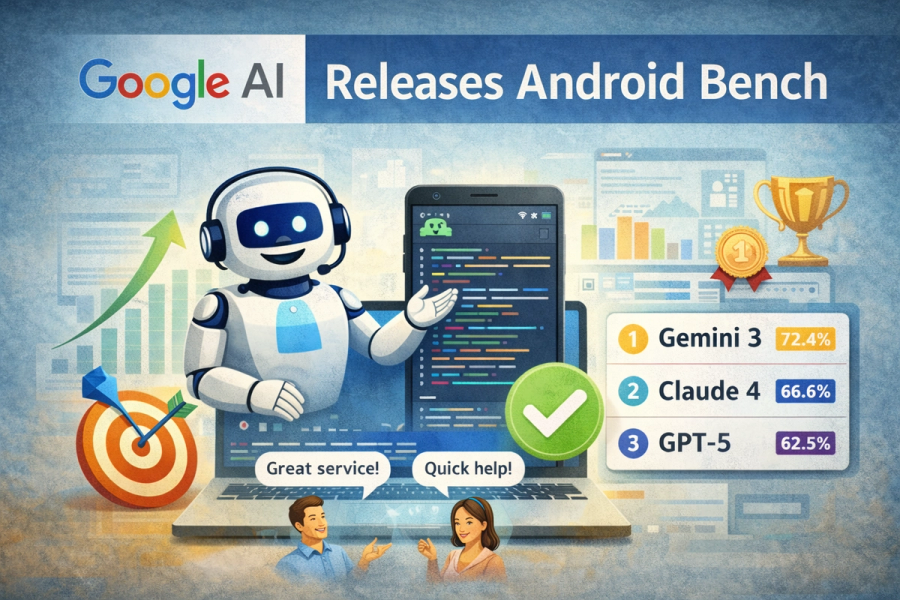
Artificial intelligence is rapidly transforming software development. From generating code to debugging applications, AI models are helping developers build software faster than ever before. To measure how well AI models perform in Android development tasks, Google recently introduced a new benchmarking framework called Android Bench.
This new benchmark is designed specifically to evaluate how effectively AI models can assist developers in building Android applications. It provides real-world testing scenarios, leaderboards, and evaluation metrics that help developers understand which AI tools perform best when working with Android code.
In this article, we’ll explore what Android Bench is, how it works, why it matters for developers, and how it could shape the future of AI-assisted Android development.
What Is Android Bench?
Android Bench is a benchmarking framework created to evaluate the performance of Large Language Models (LLMs) when solving real Android development tasks. Unlike generic coding benchmarks, Android Bench focuses specifically on the challenges developers face while building Android apps.
The benchmark measures how well AI models can:
- Fix Android code issues
- Update apps to new Android versions
- Implement features
- Migrate code to modern frameworks
- Resolve bugs in real-world Android projects
By evaluating AI models using real development scenarios, Android Bench provides more realistic insights into their capabilities.
Why Google Created Android Bench
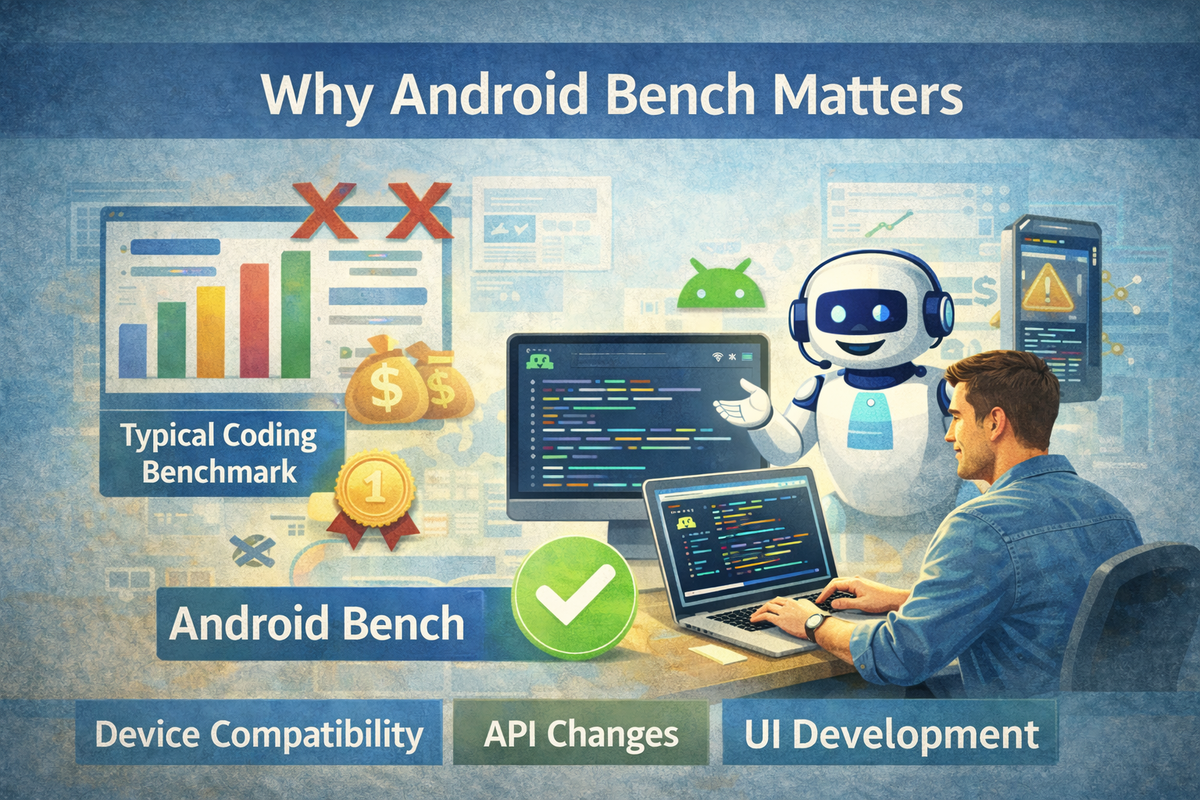
Existing coding benchmarks usually test general programming abilities, such as solving algorithms or writing simple code snippets. However, mobile development—especially Android development—comes with unique challenges.
These challenges include:
- Device compatibility issues
- Android API changes
- UI development using frameworks like Jetpack Compose
- Handling hardware-specific features
- Maintaining backward compatibility
To address these challenges, Google introduced Android Bench to measure AI models in real-world Android development environments.
The goal is to help developers identify which AI tools are most reliable for Android projects while also encouraging improvements in AI coding models.
How Android Bench Works
Android Bench evaluates AI models by presenting them with real problems taken from open-source Android projects.
These problems often include:
- Bug reports from GitHub repositories
- Code improvement requests
- Feature implementation tasks
- Pull request issues
The AI model must generate code that successfully resolves the problem.
The benchmark then verifies the generated code using:
- Automated unit tests
- Emulator-based testing
- Functional verification
If the code passes these tests, the AI receives a successful score for that task.
Key Features of Android Bench
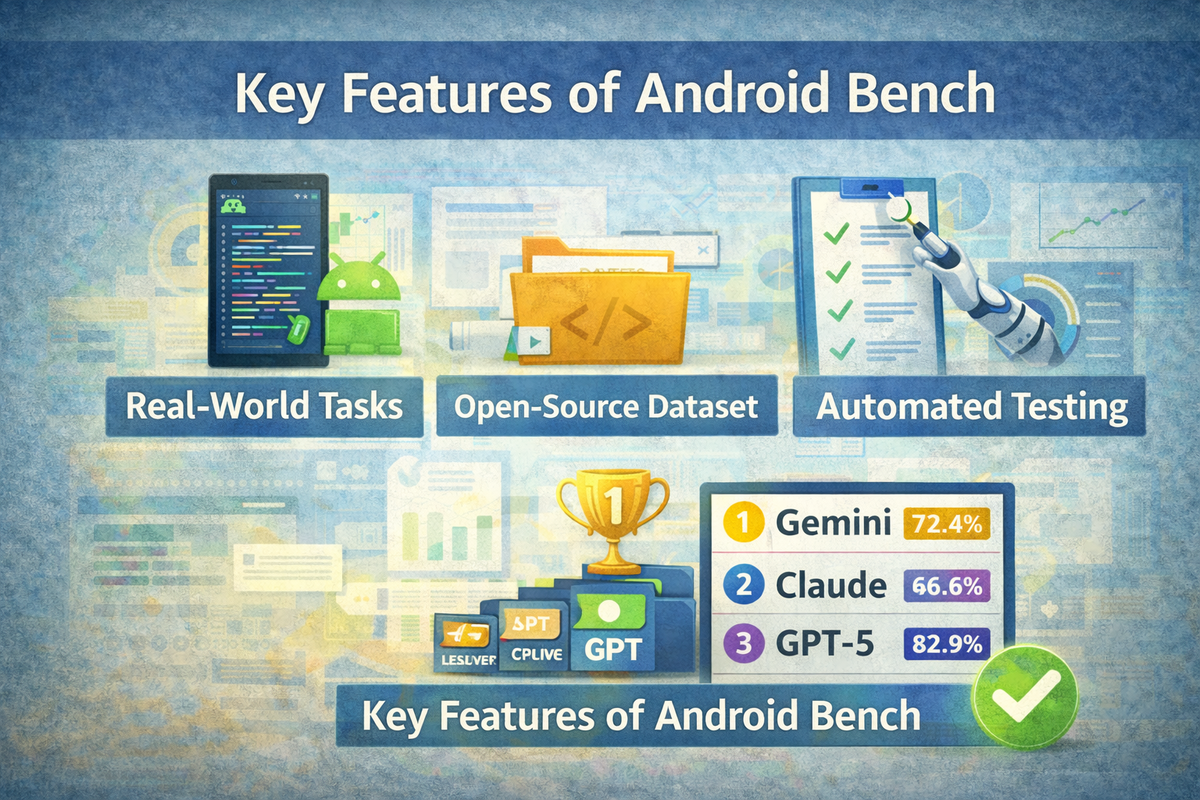
Android Bench includes several features designed to provide accurate and transparent evaluation of AI models.
Real-World Development Tasks
Instead of theoretical coding challenges, the benchmark uses actual issues from Android projects.
Open-Source Methodology
Google has made the benchmark dataset, evaluation methods, and testing tools publicly available to developers.
Model-Agnostic Testing
The benchmark evaluates the final working code rather than focusing on how the AI generated the solution.
Anti-Data Contamination Measures
Special techniques such as “canary strings” ensure that AI models are not simply memorizing solutions from training data.
These features make Android Bench one of the most practical benchmarks for evaluating AI-assisted mobile development.
Initial Android Bench Leaderboard Results
Google has already tested several AI models using Android Bench to see how well they perform.
The initial results show significant differences between models.
Top performers include:
- Gemini 3.1 Pro Preview – 72.4% success rate
- Claude Opus 4.6 – 66.6% success rate
- GPT-5.2 Codex – 62.5% success rate
Other models scored lower, with some completing only around 16% of the tasks successfully.
These results highlight how rapidly AI development tools are improving but also show that there is still room for progress.
Why Android Bench Matters for Developers
Android Bench has the potential to significantly impact the future of mobile development.
Here’s why it matters.
Helps Developers Choose the Best AI Tools
Developers can compare AI models and select the one that performs best for Android development tasks.
Improves AI Coding Assistants
AI companies can use benchmark results to identify weaknesses in their models and improve them.
Accelerates App Development
Better AI coding tools can help developers build applications faster and reduce development time.
Encourages Innovation in AI Development
Benchmarks like Android Bench push AI companies to compete and build more capable models.
The Future of AI-Assisted Android Development
AI coding assistants are already becoming common in developer workflows. Tools powered by large language models can generate code, debug issues, and suggest improvements in seconds.
With benchmarks like Android Bench, the accuracy and reliability of these tools will continue to improve.
In the future, developers may be able to build entire Android apps simply by describing what they want in natural language.
This could dramatically lower the barrier to entry for app development and allow more people to create mobile applications.
Conclusion
The launch of Android Bench by Google represents an important step in evaluating the real-world capabilities of AI coding models for Android development.
By focusing on practical development challenges, Android Bench provides developers with valuable insights into which AI tools can truly assist with building Android applications.
As AI technology continues to evolve, benchmarks like Android Bench will play a crucial role in shaping the future of software development—making coding faster, smarter, and more accessible for developers worldwide.
Written by