Why Most Enterprise Chatbot Projects Fail and How to Ensure Success
The High Failure Rate of Enterprise Chatbots

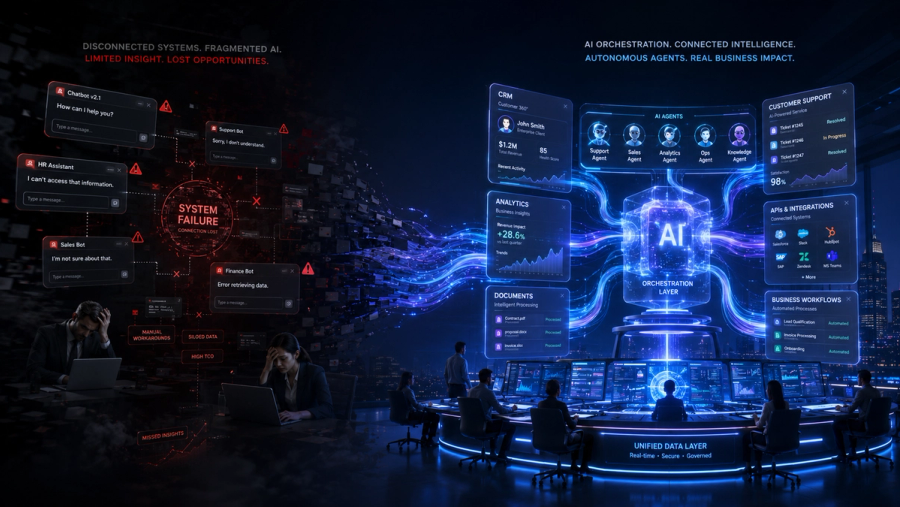
The promise of AI-powered chatbots for enterprise efficiency, customer service, and internal operations has been compelling, yet the reality often falls short. Despite significant investment and enthusiastic adoption, a substantial number of chatbot projects fail to deliver on their initial objectives. Organizations frequently find themselves with an expensive, underutilized tool that frustrates users more than it helps, leading to disillusionment with AI solutions in general. This pattern is not an indictment of the technology itself, but rather a reflection of misaligned strategies, insufficient planning, and a fundamental misunderstanding of what it takes to deploy truly effective AI agents.
The ramifications of a failed chatbot project extend far beyond the immediate financial outlay. They include wasted engineering cycles, lost opportunities to improve key business metrics, and a decline in user trust in new technological initiatives. For engineering leaders and product managers, these failures represent a significant setback, potentially delaying future AI investments and impacting competitive positioning. Understanding the common pitfalls is the first critical step toward designing and implementing a chatbot solution that not only launches but thrives, providing measurable value to the organization and its stakeholders.
Root Causes of Chatbot Underperformance
Many chatbot projects falter due to a lack of a clearly defined problem statement and scope creep. Without a precise understanding of the specific business challenge the chatbot is intended to solve, the project can quickly become an amorphous effort to answer 'any question,' which is an impossible task for even the most advanced AI. This often leads to generic, shallow responses that do not address user intent effectively, resulting in poor user experience and low adoption rates. A well-defined scope, grounded in specific user journeys and business objectives, is paramount for success.
Another prevalent issue is the quality and quantity of training data. Chatbots, especially those leveraging large language models (LLMs) with Retrieval Augmented Generation (RAG) systems, are only as effective as the data they are trained on and retrieve from. Poorly structured, outdated, or incomplete knowledge bases lead to inaccurate, irrelevant, or even hallucinated responses. Furthermore, neglecting the nuances of domain-specific language and user query patterns can render a chatbot ineffective, regardless of its underlying AI sophistication. Data governance and continuous data refinement are often overlooked but critical components.
Finally, many implementations underestimate the complexity of integrating chatbots into existing enterprise ecosystems and fail to plan for human intervention. A standalone chatbot, isolated from CRM, ERP, or other critical systems, cannot perform complex tasks or access necessary real-time information. Equally important is the absence of a graceful human handover mechanism. When a chatbot encounters a query it cannot resolve, a seamless transition to a human agent is crucial for maintaining user satisfaction and trust. Without this, users are left in a frustrating loop, defeating the purpose of automation.
Defining Success: Beyond Simple Q&A

The true measure of a successful chatbot project extends far beyond merely answering questions. Success must be defined in terms of tangible business outcomes. Organizations should shift their focus from 'can it answer this?' to 'does it achieve a specific business objective?' This could involve reducing call center volume, accelerating sales cycles, improving employee self-service efficiency, or enhancing customer satisfaction scores. Establishing these clear, measurable Key Performance Indicators (KPIs) at the outset provides a framework for design, development, and ongoing evaluation.
For example, a customer service chatbot's success might be measured by its first-contact resolution rate for specific query types, average handling time reduction, or a direct correlation to increased customer retention. An internal IT support chatbot might track the reduction in ticket volume for common issues or the speed at which employees find solutions. These metrics provide a concrete basis for demonstrating ROI and justifying the ongoing investment in the AI solution. Without this outcome-oriented approach, projects risk drifting aimlessly, unable to prove their value.
Strategic Design Principles for Robust Chatbots
Building a resilient chatbot requires a strategic approach that prioritizes user experience, data integrity, and operational sustainability. It begins with a deep understanding of user needs and pain points, meticulously mapping out common user journeys and identifying specific intents the chatbot must handle. This foundational work ensures the chatbot is designed to solve real problems, rather than being a technology in search of an application. The architecture must also account for scalability and future expansion, anticipating evolving business requirements and user interactions.
A robust data strategy is non-negotiable. This involves not only collecting and cleaning relevant domain knowledge but also establishing processes for its continuous maintenance and update. For RAG systems, this means curating high-quality, authoritative data sources and optimizing retrieval mechanisms to ensure accurate and contextually relevant responses. Furthermore, the chatbot must be seamlessly integrated with existing enterprise systems to access real-time data and trigger workflows, transforming it from a static Q&A tool into an active participant in business processes.
To build a chatbot that delivers sustained value, consider these principles:
Start small, iterate rapidly, and learn from real user interactions to refine functionality.
Prioritize high-value, high-frequency use cases that offer clear, measurable business impact.
Implement robust Retrieval Augmented Generation (RAG) to ground LLM responses in factual, enterprise-specific data.
Design clear and empathetic escalation paths to human agents for complex or sensitive queries.
Ensure seamless, secure integration with CRM, ERP, and other critical enterprise systems.
Plan for continuous learning, monitoring, and model retraining based on user feedback and performance data.
Establish clear, outcome-based performance metrics from day one to track and demonstrate ROI.
Iteration, Monitoring, and Human-in-the-Loop
A common misconception is that a chatbot project concludes upon deployment. In reality, a successful AI agent requires continuous iteration and vigilant monitoring. The operational phase is where the true value is realized and refined. Post-deployment, it is critical to implement robust analytics to track user interactions, identify common failure points, and understand evolving user needs. This data-driven approach allows for targeted improvements, such as refining intent recognition, expanding knowledge bases, or optimizing response generation.
Incorporating a human-in-the-loop mechanism is not merely a fallback for failure but a vital component of the learning process. Human agents provide invaluable feedback by reviewing chatbot conversations, correcting misinterpretations, and identifying new intents or knowledge gaps. This feedback loop directly informs model retraining and content updates, ensuring the chatbot continuously improves its performance and expands its capabilities over time. Without this active human oversight, chatbot performance will stagnate.
Furthermore, effective prompt engineering and A/B testing of different conversational flows can significantly enhance user satisfaction and task completion rates. Regularly analyzing transcripts, conducting user surveys, and performing sentiment analysis can uncover subtle areas for improvement that might otherwise be missed. Treating the chatbot as a living system that requires ongoing care and optimization, rather than a static piece of software, is fundamental to its long-term success and ability to adapt to changing user expectations and business demands.
Building a Resilient Chatbot Strategy
Building a chatbot that genuinely succeeds in an enterprise environment demands a holistic strategy that extends beyond mere technological implementation. It requires a clear vision aligned with business objectives, a robust data foundation, thoughtful user experience design, seamless integration with existing systems, and a commitment to continuous improvement. The pitfalls of inadequate planning, poor data, and a lack of human-in-the-loop processes are well-documented, yet consistently overlooked.
For engineering leaders, product managers, and technical founders, the path to successful AI agent deployment involves strategic foresight and a practical approach. This means prioritizing specific, high-impact use cases, investing in quality data pipelines, and designing for resilience with clear escalation paths. It also entails recognizing that while LLMs provide powerful capabilities, their effective application in a business context often requires sophisticated RAG systems and careful workflow automation to deliver actionable results.
By adopting these principles and leveraging expertise in AI agents, RAG systems, LLM applications, and workflow automation, organizations can move past the common failure points. The goal is not just to launch a chatbot, but to deploy an intelligent agent that consistently delivers measurable business value, enhances operational efficiency, and improves user experiences, thereby unlocking the full potential of enterprise AI.
Written by