Top MCP Servers Every Developer Should Use (Claude Code / Cursor / Codex / OpenCode)
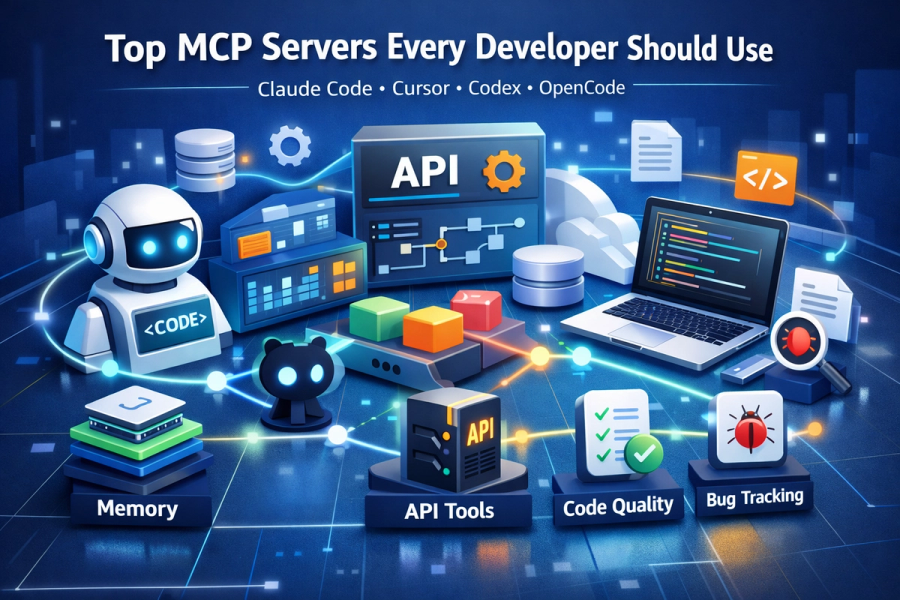
AI coding assistants like Claude Code, Cursor, Codex, and OpenCode are evolving rapidly—but their true potential is unlocked when connected to MCP servers (Model Context Protocol servers).
MCP is an open standard that enables AI models to interact with external tools, APIs, databases, and workflows in real time. It transforms AI assistants into fully capable engineering co-pilots.
Think of MCP as a universal connector for AI tools—allowing seamless integration across your development ecosystem.
What is an MCP Server?
An MCP server is a service that exposes tools, data, or APIs to AI agents using a standardized protocol.
In simple terms:
- Claude / Codex = Brain
- MCP Server = Tools
- MCP Protocol = Communication Layer
With MCP:
- AI can access GitHub, APIs, logs, and databases
- Perform real actions instead of just generating text
- Execute multi-step workflows across systems
Why MCP Servers Matter in 2026
- Unified tooling with a single protocol
- Composable AI workflows across multiple services
- Increased developer productivity
- Context-aware coding with deeper project understanding
However, developers should be mindful that MCP servers consume context tokens. Overusing them can affect performance.
Top MCP Servers Every Developer Should Use
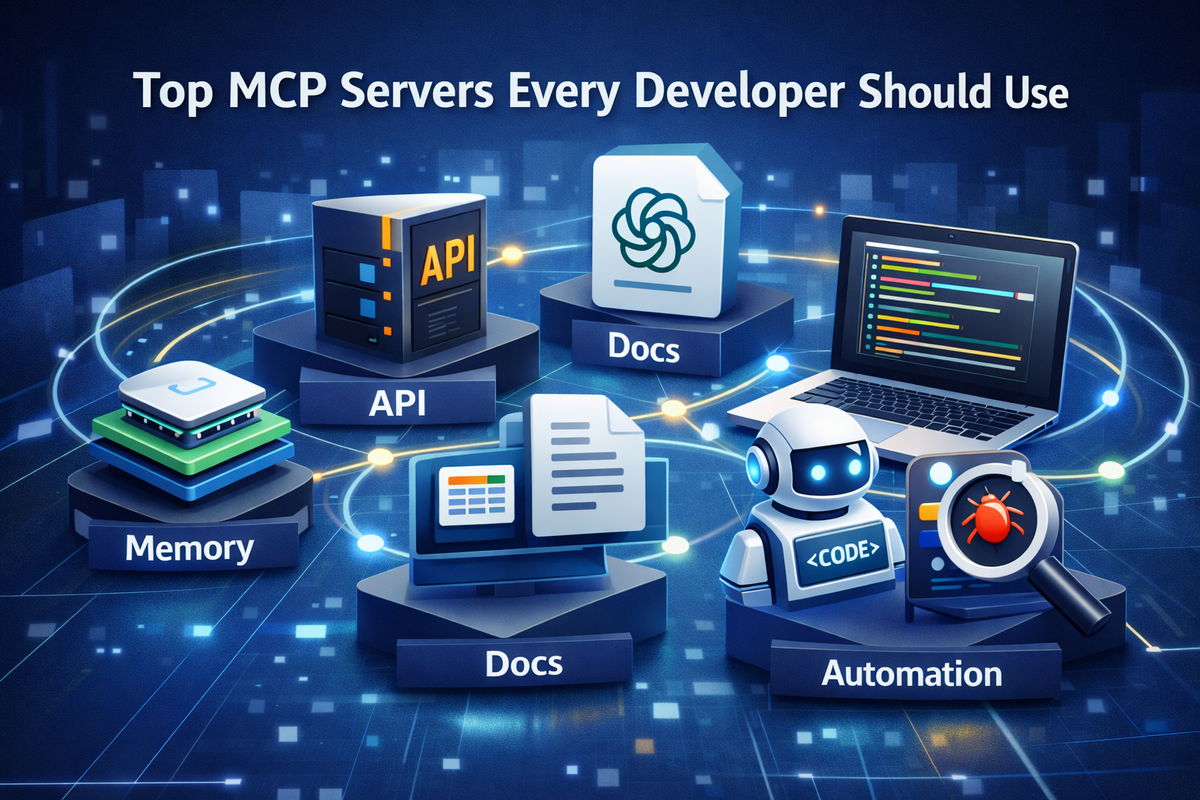
1. AI Sessions MCP Server (Memory for Your Coding Agents)
Best for: Context persistence across tools
Key Features:
- Access past sessions from Claude Code, Codex, OpenCode
- Resume previous work instantly
- Learn from historical interactions
Why it matters:
Solves the problem of AI losing context between sessions by enabling persistent memory.
2. Tenets MCP Server (Smart Context and Coding Standards)
Best for: Teams and structured development
Key Features:
- Inject coding standards into prompts automatically
- Intelligent context ranking using NLP
- Local-first architecture for privacy
Why it matters:
Improves code quality and prevents inconsistent or irrelevant AI outputs.
3. OpenAPI MCP Server (Turn APIs into AI Tools)
Best for: Backend and API-driven applications
Key Features:
- Converts OpenAPI specifications into MCP-compatible tools
- Enables AI to call APIs dynamically
- Supports REST services natively
Why it matters:
Allows AI to function like a backend engineer—fetching data and triggering workflows.
4. Claude Code MCP Server (Autonomous Coding)
Best for: Advanced automation
Key Features:
- Execute tasks without repeated permission prompts
- Perform multi-step coding operations
- Direct file system interaction
Why it matters:
Transforms AI into an autonomous coding agent rather than a passive assistant.
5. OpenAI Docs MCP Server
Best for: Documentation access inside development workflow
Key Features:
- Search and retrieve documentation within the IDE
- Inject relevant docs into AI context
- Eliminate the need to switch tabs
Why it matters:
Saves time and improves efficiency by reducing context switching.
6. Cursor MCP Installer
Best for: MCP setup and management
Key Features:
- Easy installation of MCP servers
- Supports npm packages, Git repositories, and local servers
- Works seamlessly with Cursor and Claude Code
Why it matters:
Simplifies the setup process and lowers the barrier to adopting MCP.
7. Feedboon MCP Server (Bug Tracking Integration)
Best for: Debugging and DevOps workflows
Key Features:
- View and manage bugs within your editor
- Update issues using AI
- Add comments and track progress
Why it matters:
Integrates issue tracking directly into the AI-assisted development process.
Recommended MCP Stack for Developers
| Use Case | MCP Server |
| Memory | AI Sessions |
| Code Quality | Tenets |
| APIs | OpenAPI MCP |
| Documentation | OpenAI Docs |
| Automation | Claude Code MCP |
| Setup | Cursor MCP Installer |
Risks and Best Practices
Key Risks:
- Prompt injection attacks
- Data leakage through insecure integrations
- Token overload
- Weak authentication mechanisms
Best Practices:
- Use only trusted MCP servers
- Limit the number of active integrations
- Regularly audit permissions
- Prefer local or self-hosted solutions where possible
Future of MCP Servers
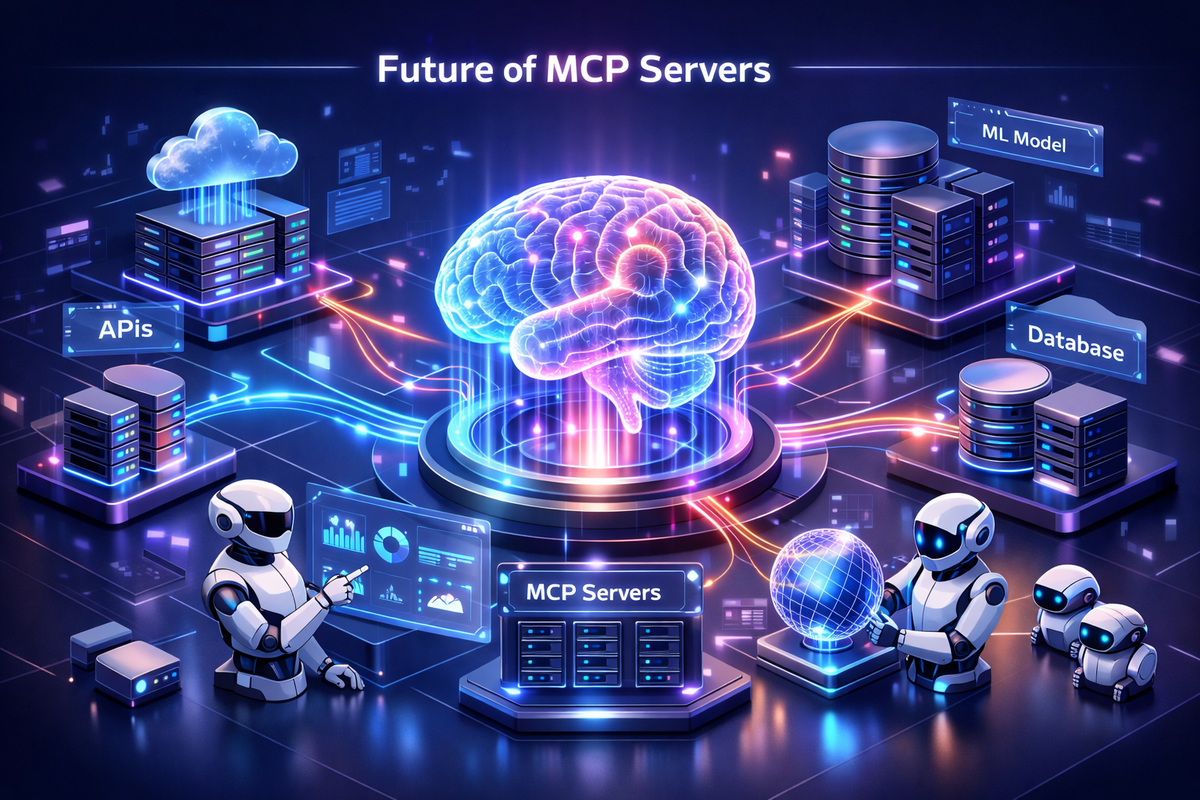
MCP is rapidly becoming a standard across major AI development tools, including Claude, Cursor, Codex, and others.
Key trends:
- Growth of the MCP ecosystem with thousands of servers
- Increased adoption of multi-agent workflows
- AI-driven development pipelines replacing traditional approaches
Final Thoughts
MCP servers are not just extensions—they represent the foundation of modern AI-powered development.
Developers using Claude Code, Cursor, Codex, or OpenCode without MCP integration are missing significant productivity and automation benefits.
Adopting MCP early provides a strong competitive advantage in building intelligent, scalable, and efficient software systems.
Written by