The End of RAG? Google’s Memory-Based AI Agents Explained
Artificial Intelligence is undergoing a fundamental shift.
For the past few years, Retrieval-Augmented Generation (RAG) has been the dominant architecture powering modern AI systems — from chatbots to enterprise copilots. It solved one of the biggest limitations of large language models: lack of real-time knowledge and context.
But now, a new paradigm is emerging.
Google and other AI leaders are experimenting with memory-based AI agents — systems that don’t just retrieve information, but remember, reflect, and evolve over time.
This raises a bold question:
Is this the beginning of the end for RAG?
Let’s explore what’s changing, why it matters, and what it means for the future of AI.
What is RAG (Retrieval-Augmented Generation)?
Before we talk about the shift, it’s important to understand what made RAG so powerful.
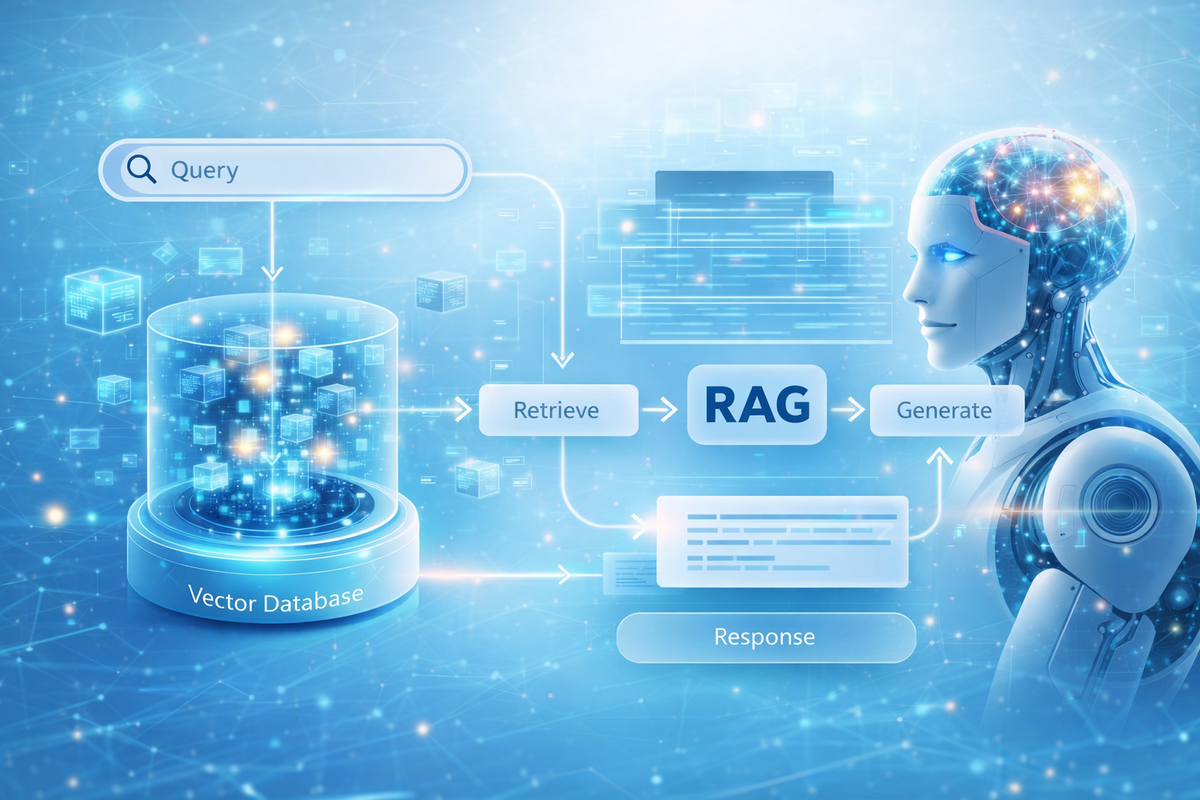
RAG combines two key components:
- Retriever – Fetches relevant information from external sources (like vector databases)
- Generator – Uses an LLM to generate responses based on retrieve
Why RAG became the standard
- Solves hallucination issues
- Enables real-time knowledge access
- Works with private/company data
- Scales well for enterprise use cases
In simple terms, RAG allows AI to:
“Look things up before answering.”
And for a while, this was revolutionary.
The Hidden Limitations of RAG
Despite its success, RAG has fundamental limitations that are becoming more visible as AI systems grow more complex.
1. Stateless Interactions
RAG systems don’t truly “remember.”They retrieve context for each query — but don’t build long-term understanding.
2. Fragmented Knowledge
Information is stored as chunks in a vector database:
- No deep relationships
- No evolving understanding
- No synthesis across time
3. Retrieval ≠ Reasoning
RAG is excellent at finding relevant data, but:
- It doesn’t think over time
- It doesn’t learn from experience
- It doesn’t generate new knowledge from memory
4. Over-Reliance on Vector Databases
Most RAG pipelines depend heavily on:
- Embeddings
- Similarity search
- Chunking strategies
This introduces:
- Latency
- Complexity
- Maintenance overhead
Enter Memory-Based AI Agents
Google’s emerging approach introduces a radically different idea
What if AI didn’t need to retrieve context every time—because it already remembers it?
Memory-based agents shift the paradigm from
- Search → Generate to
- Remember → Reflect → Think → Act
How Memory-Based AI Agents Work
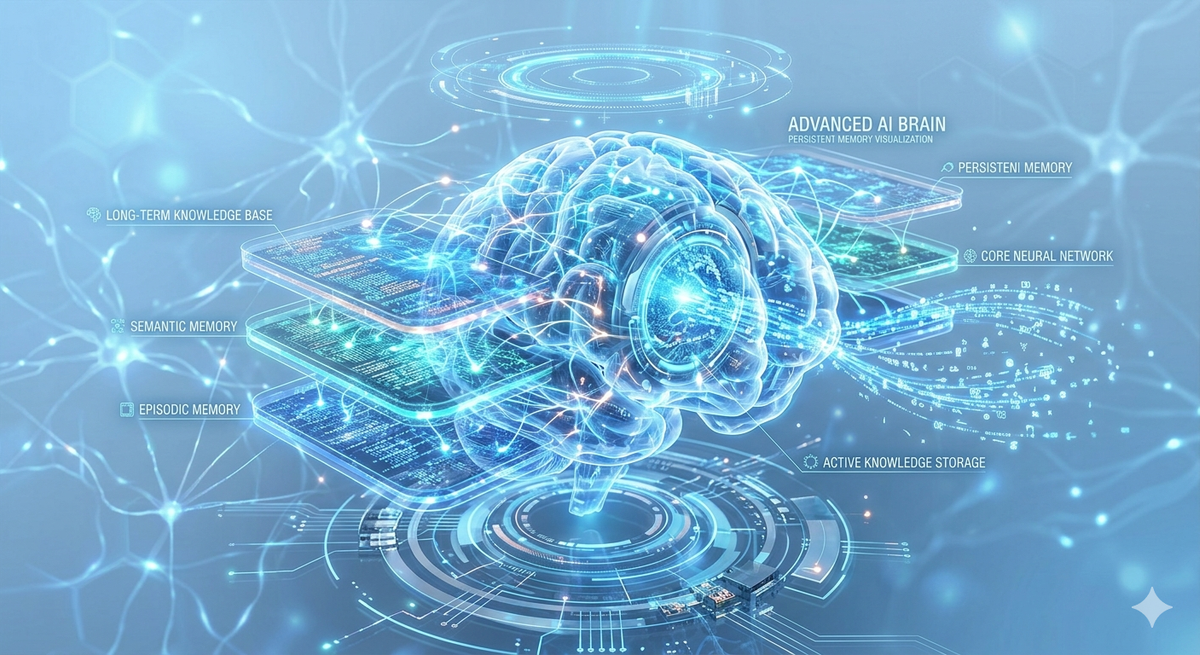
Instead of relying on external retrieval systems, these agents use persistent, evolving memory systems.
Core Concept:
AI maintains a living memory store that grows over time.
1. Persistent Memory Layer
- Stores past interactions, data, and experiences
- Not just raw text — but structured understanding
- Continuously updated
2. Memory Consolidation (The Breakthrough)
This is where things get interesting.
A specialized component (often called a Consolidation Agent) periodically:
- Reviews stored memories
- Identifies patterns
- Merges related information
- Generates new insights
This is similar to how the human brain:
- Processes experiences during sleep
- Converts short-term memory into long-term knowledge
3. Reasoning Over Memory (Not Retrieval)
Instead of fetching documents:
- The AI thinks using its accumulated knowledge
- Builds context internally
- Generates responses based on learned patterns
4. Multi-Agent Architecture
These systems often include:
- Planner → Breaks goals into steps
- Executor → Performs actions
- Critic → Evaluates outputs
- Memory Agent → Manages learning
This creates a self-improving loop.
RAG vs Memory-Based Agents: Key Differences
Why This Is a Big Deal
This isn’t just a technical upgrade — it’s a shift in how AI thinks.
1. From Information Access → Knowledge Creation
RAG finds information.Memory agents create understanding.
2. From Stateless → Stateful AI
AI systems now:
- Remember users
- Track history
- Adapt behavior
3. From Tools → Autonomous Systems
Instead of assisting:
- AI agents can plan and execute entire workflows
4. From Prompt Engineering → Experience Learning
Success is no longer about:
- Writing better prompts
But about:
- Building better memory systems
Real-World Implications
Enterprise AI
- AI copilots that remember company context
- Continuous learning from internal workflows
Customer Experience
- Truly personalized interactions
- AI that understands users over time
Automation
- End-to-end task execution
- Minimal human intervention
Research & Analysis
- Agents that build knowledge over weeks/months
- Not just one-time outputs
Does This Mean RAG is Dead?
Not quite.
RAG is still extremely useful for:
- Real-time data retrieval
- External knowledge access
- Compliance and traceability
The Real Future:
Hybrid Systems
The most powerful AI architectures will combine:
- RAG (for fresh, external data)
- Memory (for long-term learning and reasoning)
What Comes Next?
We are moving toward AI systems that:
- Continuously learn
- Collaborate with other agents
- Operate autonomously
- Build internal knowledge over time
This is the foundation of Agentic AI — where systems behave less like tools and more like thinking entities.
What This Means for Your Business
If you’re building or using AI today, this shift is critical.
You need to start thinking about:
- Memory architecture
- Long-term context
- Agent workflows
- Continuous learning systems
Because the competitive advantage is no longer:
“Who has AI?”
It’s:
“Who has smarter, learning AI systems?”
Final Thoughts
RAG changed AI by giving it access to information.
Memory-based agents will change AI by giving it understanding.
We are moving from:
- Retrieval → Reasoning
- Context → Memory
- Responses → Intelligence
The end of RAG isn’t a replacement — it’s an evolution.
And the future belongs to systems that don’t just know more…
…but learn, think, and grow over time.
At CognyX AI, we’re building the next generation of intelligent systems — from RAG-powered copilots to memory-driven AI agents that learn, adapt, and act autonomously. Whether you're exploring AI for the first time or scaling advanced agent workflows, our team helps you design solutions that deliver real business impact. CognyX AI blends generative AI, machine learning, and automation to create systems that reduce costs, accelerate operations, and unlock new growth opportunities
Written by