Self-Healing Test Automation: How AI Fixes Broken Tests Automatically
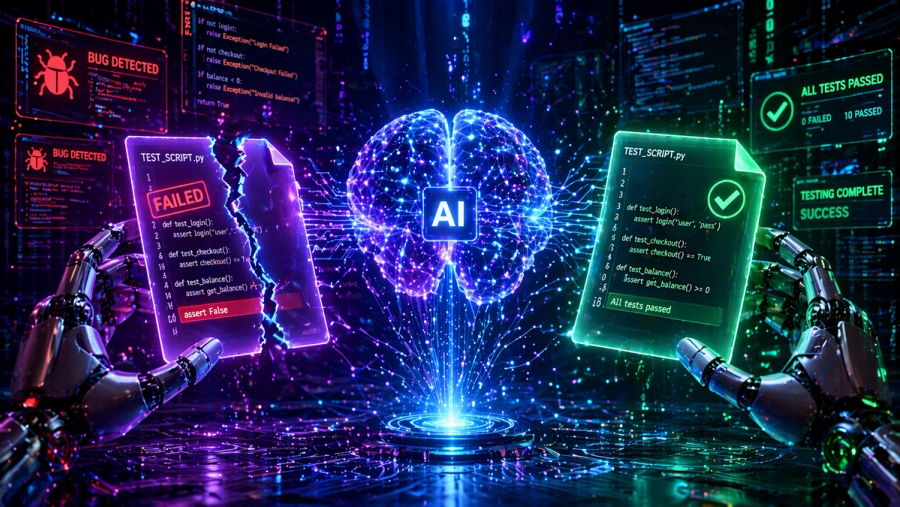
Every QA team knows the pain. A developer renames a button. A layout shifts. A component re-renders. And suddenly, dozens of automated tests fail — not because the app broke, but because the test scripts did. Traditional scripts break easily — a button is renamed, a div moves, or a component is restyled — and automation collapses.
Self-healing test automation is the AI-powered solution to this problem. It detects changes automatically and fixes broken tests without human intervention. In 2026, it has become one of the most critical capabilities in modern QA.
What is Self-Healing Test Automation?
Self-healing test automation uses AI and machine learning to detect when application changes break a test — and then repair the test automatically, without any manual intervention.
AI-driven algorithms in self-healing test automation identify, analyze, and dynamically update test scripts whenever application changes happen in the UI or the underlying code. In contrast to traditional automation that necessitates manual effort for even minor changes, self-healing test automation frameworks autonomously adapt and ensure uninterrupted execution.
Key Insight: Self-healing doesn't just skip broken tests — it understands what changed and fixes the root cause.
Why Traditional Test Automation Breaks
Software testing has traditionally meant either manual testers clicking through an app or engineers writing automated scripts that break the moment something in the UI changes. Early test automation helped speed things up, but tests were rigid: a renamed button or updated layout could tank an entire suite.
The core problem is static locators. Traditional frameworks rely on fixed identifiers like XPath and CSS selectors to find elements on a page. When the UI changes — even slightly — those identifiers stop working and tests fail.
Modern apps make this worse:
- React, Next.js, and Vue generate dynamic, non-static DOMs
- Microfrontends split UI across independent services
- Personalization engines create different UI states per user
- CI/CD pipelines ship updates daily — sometimes hourly
In this environment, automation without self-healing becomes brittle. Test suites break with every small UI update. Self-healing systems absorb these changes, reduce root-cause analysis time, and protect engineering velocity.
How Self-Healing Actually Works
The process follows a clear, automated cycle:
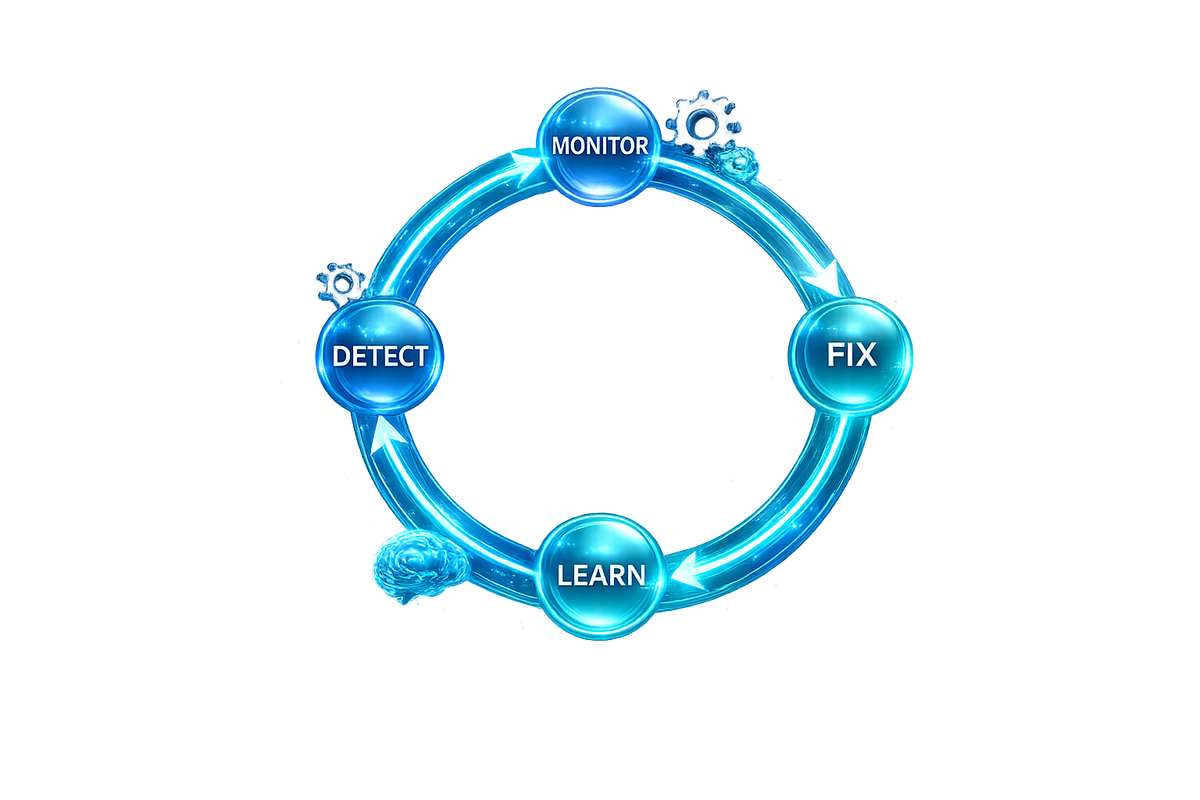
1. Real-Time Monitoring The system tracks UI changes continuously as the application evolves.
2. Error Detection When a test fails to locate an element, the self-healing mechanism flags the issue and investigates.
3. AI Analysis The framework suggests and applies the best match for the missing element, ensuring test continuity. ACCELQ Instead of relying on one broken selector, the AI uses multiple attributes — visual context, text content, position, and element type — to identify the correct element.
4. Automatic Fix The test script is updated dynamically with the new, correct locator. The test continues running without stopping.
5. Validation The corrected test case is executed to verify that the changes do not introduce false positives.
6. Continuous Learning The system learns from every fix, improving its prediction accuracy over time and reducing future failures.
Key Insight: It's like having a smart assistant that says, "I couldn't find the login button by the old selector, but I noticed a new one that matches the description, so I clicked that."
What Makes a Good Self-Healing Tool?
Not all self-healing platforms are equal. Here's what to look for:
1. Multi-Attribute Element Recognition
The best tools don't depend on a single selector. They use visual context, text labels, DOM position, and multiple attributes combined to locate elements reliably.
2. Transparency & Audit Logs
Detailed logs show which locator failed, what attributes the system used to heal it, and the new identifier that replaced the old one. Leading platforms provide clear, visual reporting so QA teams understand exactly how healing occurred and why.
3. CI/CD Integration
Self-healing automation that adapts to minor UI changes without requiring manual updates reduces test maintenance overhead, but only if it runs automatically inside your pipeline on every commit.
4. Human Override Controls
QA oversight is still needed. The best platforms let teams approve or reject healing decisions rather than applying every fix blindly.
Top Self-Healing Test Automation Tools in 2026
The AI test automation tools actually delivering ROI for enterprise teams right now fall into three categories: visual validation, autonomous test generation, and self-healing execution.
Mabl
Mabl's agentic tester uses multiple AI technologies to autonomously update your tests, eliminating up to 95% of test maintenance and keeping your team in flow. Mabl It goes beyond brittle XPath by using visual context and multiple attributes for robust testing across React and Angular.
Key Features:
- Adaptive auto-healing for UI and API tests
- Agentic tester that asks for human input when clarification is needed
- Direct CI/CD pipeline integration
- Trusted by Workday, JetBlue, and Vivid Seats
Testim (by Tricentis)
Testim uses machine learning to simplify end-to-end UI testing. Its ML-based smart locators automatically recognize and update UI elements, making automated tests much more resilient to UI changes.
Key Features:
- ML-powered smart locators
- Self-healing for flaky test reduction
- Hybrid codeless + scripted approach
- Fast test authoring with stable long-term maintenance
Testsigma
Testsigma offers code-free intelligent AI-driven test automation that has self-healing capabilities in continuous testing. NLP engine lets testers write tests in plain English — no scripting expertise required.
Key Features:
- Plain English test authoring
- AI-generated tests from requirements or user stories
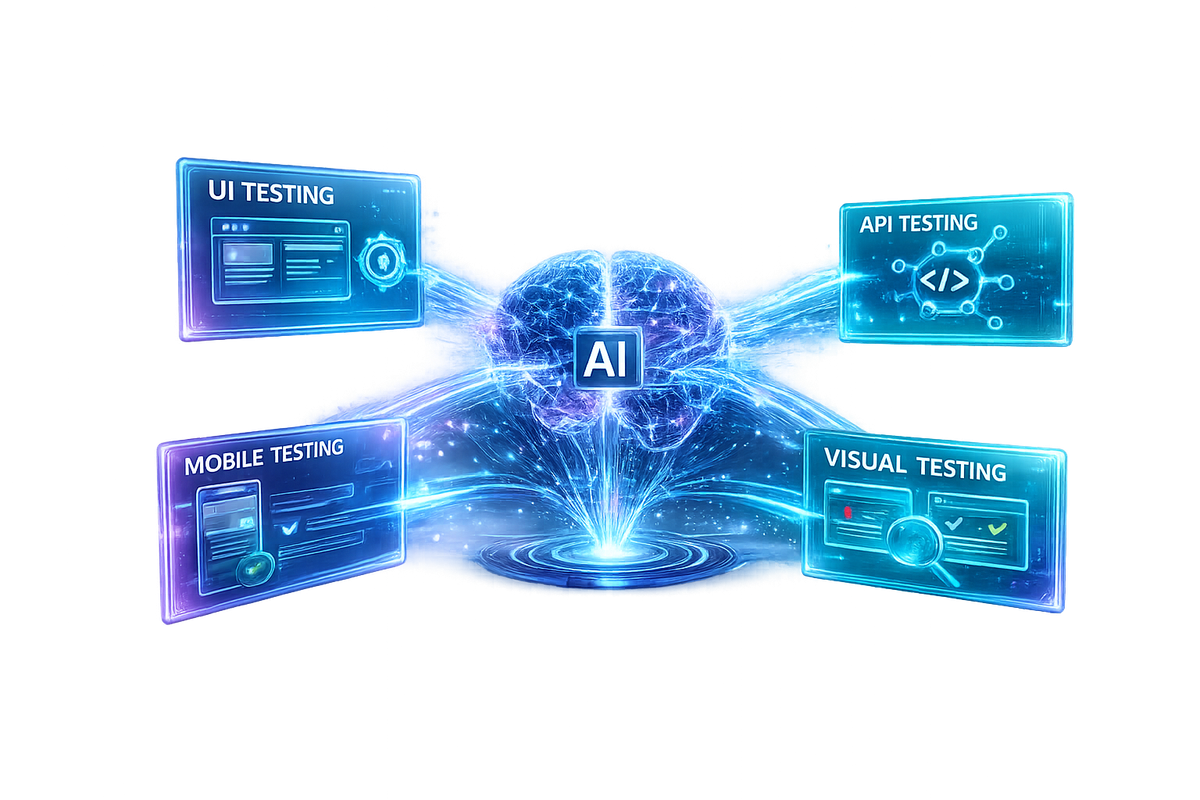
- Self-healing across web, mobile, API, and desktop
- Integrates with 30+ CI/CD and project management tools
Katalon Studio
Katalon's AI features include self-healing locators that automatically update broken object references and smart suggestions for improving test cases.
Key Features:
- Self-healing for web and mobile tests
- Unified platform for all test types
- Good for teams transitioning from manual to automated testing
Cypress with cy.prompt()
When Cypress generates steps from your prompt, it doesn't rely on static selectors alone. Instead, it uses AI to understand the intent of each action and locate elements in a more adaptable way. If your markup changes, Cypress can update selectors automatically — no manual edits required.
Key Features:
- Built directly into the Cypress environment
- Natural language test authoring
- Full transparency in the Command Log
- No new frameworks or context-switching required
Perfecto
Perfecto is an AI-powered test automation platform offering AI-driven test creation, self-healing, and root cause analysis, streamlining testing and maintenance for enterprise-scale teams.
Key Features:
- Self-healing with automatic root cause analysis
- Real-device and cross-browser coverage
- Accessibility and visual testing
- Strong enterprise compliance and SSO support
Where Self-Healing Fits in Your Testing Workflow
Self-healing integrates across every phase of the development lifecycle:
During Test Creation — Engines capture locators and user intent as baselines, so healing has accurate references from day one.
During CI/CD Execution — AI testing tools plug directly into CI/CD workflows, running automatically on every commit or pull request so bugs get caught before code merges.
During Regression Testing — By learning from historical defects, AI helps teams prioritize high-risk areas and scale regression testing efficiently as applications grow.
During Reporting — Audit logs and healing reports give QA teams full visibility into what changed, what was fixed, and why.
What Self-Healing Cannot Do
Self-healing is powerful — but it has real limits. Being clear about these prevents over-reliance:
- It does not replace proper test design. Missing assertions still fail.
- It is not an auto-pass system. Major UI redesigns still require manual test updates.
- It cannot make judgment calls about business risk or user experience.
- Complete application re-architectures still need human-led test rewrites.
Automated self-healing can help minimize the manual tasks of keeping test scripts and repairing flaky tests, but it cannot substitute critical thinking, exploratory testing, and user-centered insights that can be given only by skilled QA engineers.
The Business Impact

The numbers tell a clear story:
- Gartner expects 70% of enterprises that have adopted AI-powered testing by 2026 to accelerate release cycles and enhance the quality of software they deliver.
- Mabl's adaptive auto-healing eliminates up to 95% of test maintenance
- freeing engineers to focus on building new coverage instead of fixing old scripts.
- 81% of development teams now use AI in their testing workflows. The question is no longer whether to use it — it's which tool to choose.
How to Choose the Right Tool
Selecting the right self-healing platform depends on your team's size, stack, and maturity:
For small teams and startups — Start with Cypress cy.prompt() or Testsigma. Low setup overhead, quick wins, no need for dedicated QA engineers.
For mid-size product teams — Mabl or Katalon offer the best balance of AI power and ease of use, with solid CI/CD integration.
For large enterprises — Perfecto or Testim (Tricentis) provide the compliance, scalability, governance, and enterprise security features regulated industries require.
Universal advice: Combine tools. Use a self-healing platform for UI tests, a visual testing tool for layout regressions, and keep human engineers focused on exploratory and risk-based testing.
The Future of Self-Healing Test Automation
The shift from traditional automation to AI-driven, self-learning test systems isn't just an upgrade — it's a complete paradigm shift. Machine learning algorithms now predict defects before they occur. Natural language processing writes test cases from plain English requirements. Computer vision validates UI changes across thousands of screen combinations in seconds.
The next evolution is fully agentic testing — AI systems that not only heal broken tests, but proactively generate new ones based on code changes, user behavior patterns, and risk analysis. That future is already arriving in 2026.
Final Thoughts
Broken tests are not a testing problem — they are a velocity problem. Every hour spent manually fixing flaky selectors is an hour not spent shipping features, improving coverage, or finding real bugs.
Self-healing test automation gives QA teams their time back. It makes test suites resilient to the inevitable changes that come with modern, fast-moving software development. And in 2026, with CI/CD pipelines shipping multiple times a day, resilience is no longer optional.
The teams winning at software quality are not the ones writing the most tests. They are the ones building systems smart enough to maintain themselves.
Written by