Multi-Agent Systems: The Future of Scalable AI Applications
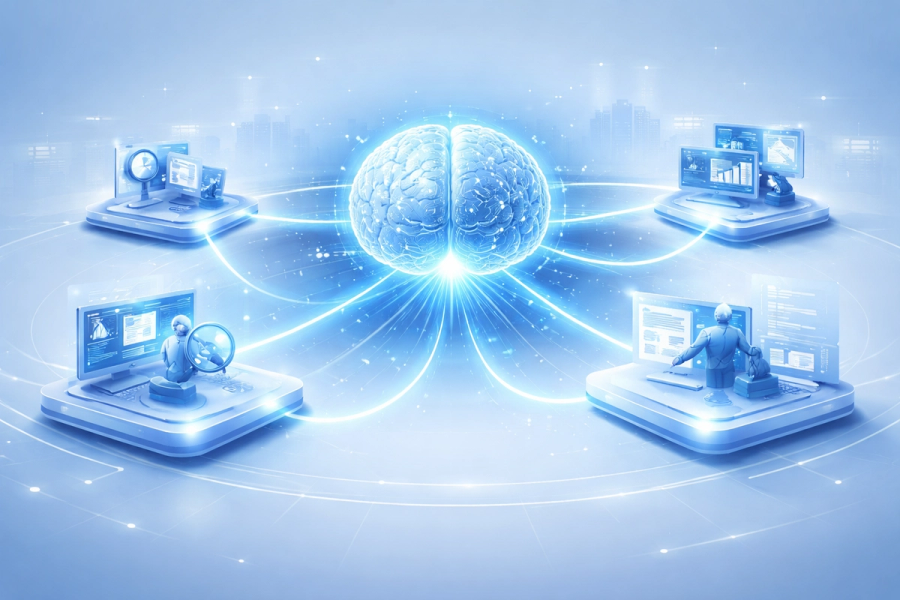
Artificial Intelligence is evolving rapidly—but as systems grow more complex, a single model often struggles to handle everything efficiently. This is where Multi-Agent Systems (MAS) step in.
Instead of relying on one large AI model, multi-agent systems distribute intelligence across multiple specialized agents that collaborate to solve problems. This approach is emerging as a core architecture for scalable, reliable, and intelligent AI applications in 2026 and beyond.
What Are Multi-Agent Systems?
A Multi-Agent System is a framework where multiple AI agents work together, each performing a specific role.
Key Components:
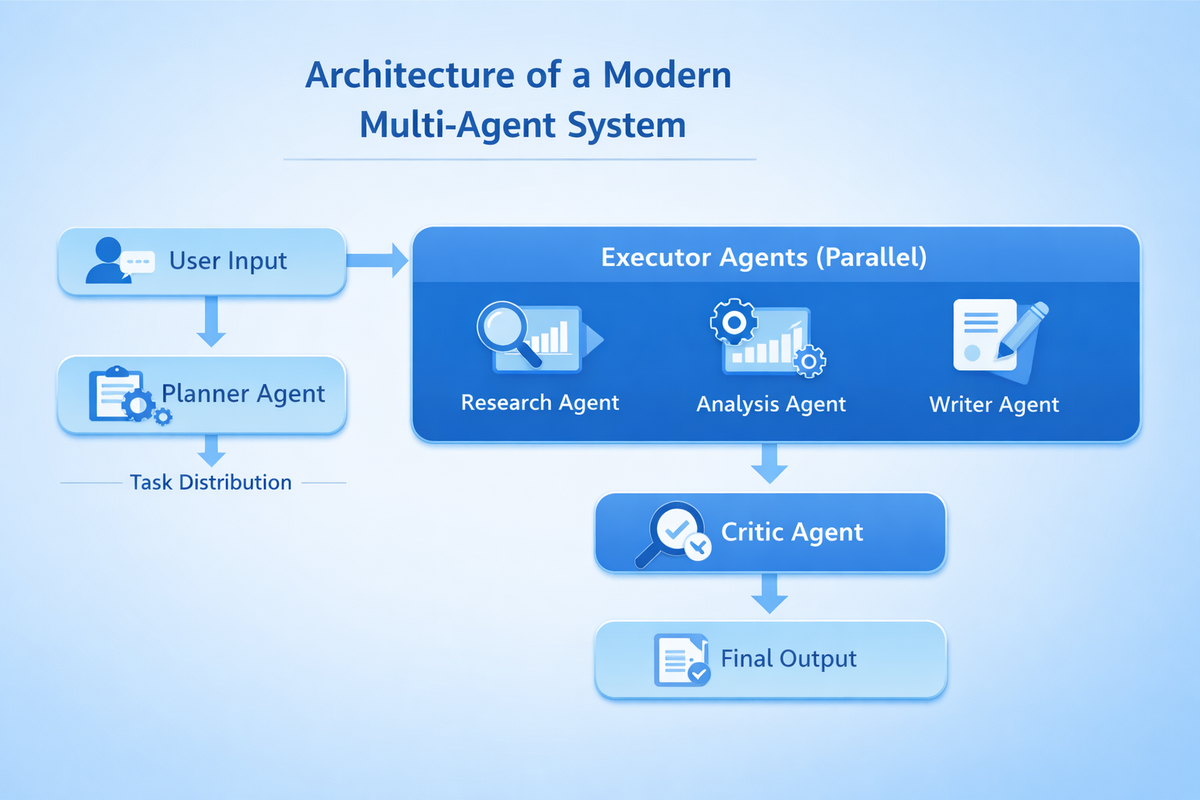
- Planner Agent → Breaks down tasks into smaller steps
- Executor Agents → Perform specific actions (e.g., search, summarize, analyze)
- Critic/Validator Agent → Reviews outputs and ensures quality
- Memory Agent → Stores and retrieves context
- Coordinator/Orchestrator → Manages communication and workflow
Simple Example
A user asks: “Create a market analysis report.”
Instead of one model doing everything:
- The planner splits the task
- A research agent gathers data
- An analysis agent processes insights
- A writer agent generates content
- Critic agent reviews and improves
Why Multi-Agent Systems Are Gaining Popularity
1. Scalability
Single AI models hit limits quickly. Multi-agent systems:
- Handle parallel tasks
- Scale horizontally
- Reduce processing bottlenecks
2. Specialization
Each agent focuses on one task:
- Higher accuracy
- Better performance
- Reduced hallucination
3. Fault Tolerance
If one agent fails:
- Others continue working
- System can retry or reroute tasks
4. Flexibility
You can:
- Add/remove agents easily
- Customize workflows
- Adapt to new use cases
Architecture of a Modern Multi-Agent System
A typical architecture looks like this:
Advanced Features:
- Dynamic agent selection
- Feedback loops
- Self-improving workflows
- Tool integration (APIs, databases, search engines)
The 2026 "Agentic Stack"
To build these systems, developers are no longer just writing prompts; they are using sophisticated orchestration frameworks:
| Framework | Best For | Key Feature |
| LangGraph | Cyclical & Stateful Workflows | Uses a directed graph to manage complex loops and human-in-the-loop gates. |
| Microsoft AutoGen | Conversational Delegation | Excellent for "agent debates" where AI agents critique each other to improve quality. |
| CrewAI | Role-Based Orchestration | Highly intuitive for "hiring" a digital crew with specific backstories and goals. |
| Anthropic MCP | Standardized Tooling | The "Model Context Protocol" allows agents to share tools across different platforms and models. |
Real-World Use Cases
1. Enterprise Automation
- Customer support bots with multiple agents
- Automated workflows across departments
- Intelligent document processing
2. AI Content Creation
- Research agent → gathers data
- Writing agent → drafts content
- SEO agent → optimizes keywords
- Editor agent → refines tone
3. Software Development
- Code generation agent
- Debugging agent
- Testing agent
- Documentation agent
4. Healthcare Systems
- Diagnosis support agents
- Data analysis agents
- Patient monitoring agents
5. Financial Services
- Risk analysis agents
- Fraud detection agents
- Investment recommendation agents
Multi-Agent vs Single-Agent Systems
| Feature | Single-Agent AI | Multi-Agent Systems |
| Scalability | Limited | High |
| Flexibility | Low | High |
| Reliability | Moderate | High |
| Performance | Generalized | Specialized |
| Complexity Handling | Weak | Strong |
Challenges in Multi-Agent Systems
1. Coordination Complexity
Managing multiple agents requires:
- Smart orchestration
- Efficient communication protocols
2. Latency
More agents can mean:
- Increased response time (if not optimized)
3. Cost
Running multiple agents:
- Can increase compute costs
- Needs optimization strategies
4. Debugging Difficulty
When something goes wrong:
- Harder to trace which agent failed
Future Trends in Multi-Agent AI
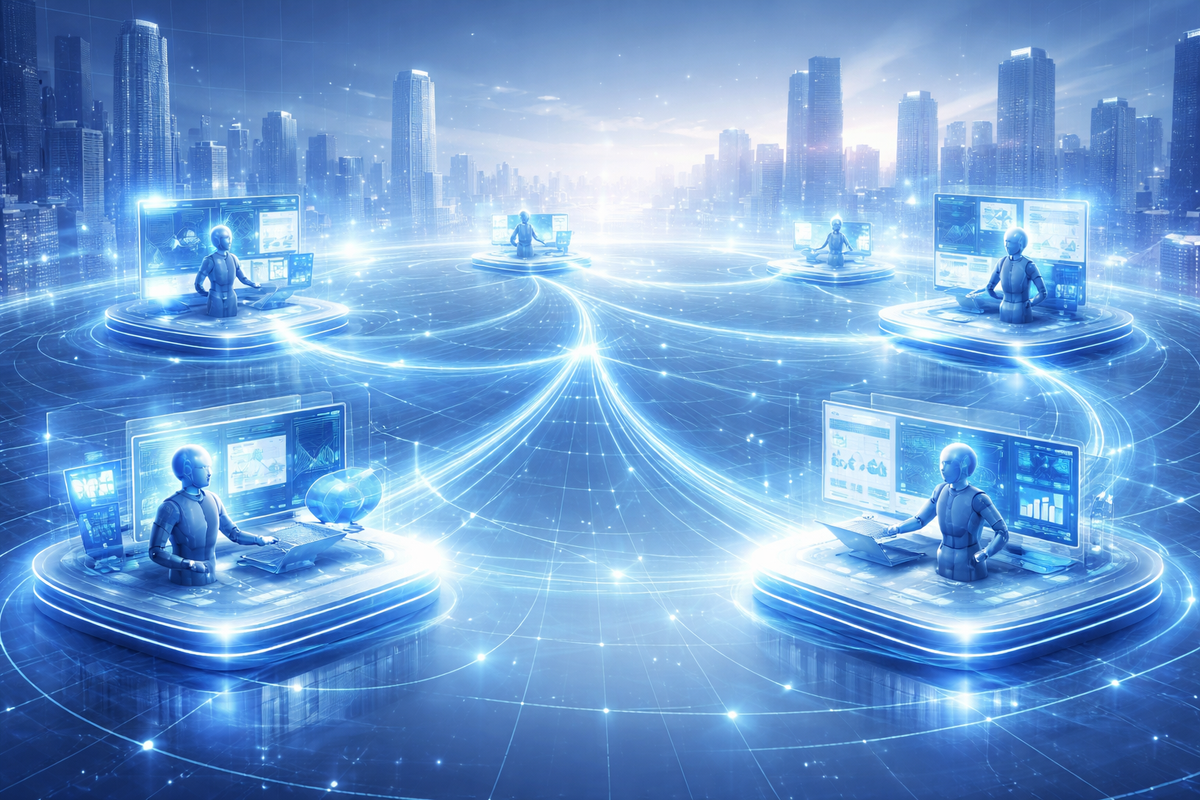
1. Autonomous Agent Ecosystems
Agents will:
- Collaborate without human intervention
- Make independent decisions
2. AI Agent Marketplaces
- Pre-built agents for specific tasks
- Plug-and-play architectures
3. Self-Improving Systems
Agents will:
- Learn from past interactions
- Continuously optimize workflows
4. Integration with Real-World Systems
- IoT devices
- Robotics
- Smart cities
Why Multi-Agent Systems Are the Future
As AI applications grow more complex, the need for:
- Scalability
- Reliability
- Modularity
becomes critical.
Multi-agent systems solve these challenges by mimicking human teamwork, where multiple experts collaborate to achieve a common goal.
Conclusion
Multi-Agent Systems represent a paradigm shift in AI architecture. Instead of building bigger models, we’re building smarter systems composed of multiple intelligent agents.
This approach unlocks:
- Better performance
- Greater scalability
- More robust AI solutions
As we move into the next phase of AI evolution, multi-agent systems will become the backbone of advanced, scalable applications across industries.
Written by