AI Agents in 2026: How Autonomous Workflows Are Replacing Traditional SaaS

Over the past decade, SaaS became the default infrastructure of digital business. Companies built entire ecosystems around specialized tools — CRM, marketing automation, analytics, customer support, operations — each solving one problem in isolation. The model worked. Until it didn't.
By 2026, the cracks are undeniable. Businesses are drowning in tool overload, paying for dozens of subscriptions that barely talk to each other, spending enormous human effort just to move data between systems. The average enterprise manages over 100 SaaS tools simultaneously — creating data silos, integration complexity, rising costs, and workflows that are only as fast as the humans operating them.
A new paradigm is replacing this fragmented model: AI Agents powered by autonomous workflows.
Unlike SaaS tools that wait for human input, AI agents understand objectives, make decisions, and execute tasks independently — across multiple systems, simultaneously, around the clock. The strategic question businesses asked in 2022 was "Which tool should we use?" In 2026, that question has become "How can AI complete this entire workflow for us?"
This shift is not incremental. It is transformational — redefining productivity, cost structures, and competitive advantage across every industry.
What Are AI Agents?
AI agents are autonomous digital systems capable of performing complex, multi-step tasks with minimal human intervention. They go far beyond simple automation by incorporating four distinct operational layers that together enable genuine decision-making — not just rule-following.
1. Reasoning Layer Powered by Large Language Models (LLMs), the reasoning layer allows an agent to understand natural language instructions, interpret context and intent, and generate intelligent multi-step plans. This is what separates AI agents from traditional bots — they understand what you mean, not just what you typed.
2. Memory Layer AI agents maintain continuity across interactions through two memory types. Short-term memory holds the context of the current task — what has been done, what is pending, what constraints apply. Long-term memory stores user preferences, historical outcomes, and organizational knowledge that improves performance over time. This is something traditional SaaS tools fundamentally cannot do.
3. Tool Interaction Layer Agents connect directly with external systems — CRMs like Salesforce and HubSpot, databases, email platforms, Slack, payment gateways, and any API-accessible service. Critically, they don't just read data from these systems. They take action inside them — creating records, sending messages, triggering workflows, and updating statuses without human instruction.
4. Execution Layer This is where objectives become outcomes. The execution layer breaks high-level goals into discrete tasks, sequences them logically, monitors results in real time, and iterates based on what is working and what is not. This closed-loop execution is what makes AI agents behave less like software and more like autonomous digital employees.
In practice, an AI agent can plan tasks, execute actions across systems, learn from outcomes, and continuously optimize its own performance — capabilities that no chatbot, no RPA script, and no traditional SaaS dashboard can match.
Traditional SaaS vs. AI Agents: The Core Difference
- The transition from SaaS to AI agents is not just a technology upgrade — it is a philosophical shift in how work gets done.
- The Traditional SaaS Problem A typical enterprise sales workflow looks like this: open the CRM to find leads, export the data to a spreadsheet, upload it to the email marketing platform, manually segment the list, write the campaign, schedule it, then wait for analytics to arrive in a separate tool before making any decisions. Every step requires a human. Every hand-off creates a delay. Every tool generates data that lives in isolation.
- Even organizations that have invested heavily in integration platforms and automation tools still require significant human orchestration to keep workflows running. The tools assist — but humans remain the connective tissue.
- The AI Agent Model With AI agents, the same workflow collapses into a single instruction: "Find high-quality leads and run a personalized outreach campaign." The agent then independently identifies and segments leads, crafts personalized messages based on each prospect's profile, executes the campaign, monitors performance in real time, and adjusts messaging based on early engagement signals — all without a human issuing a single follow-up instruction.
- This is the fundamental shift: from software that assists humans to systems that act on behalf of humans. It reduces operational complexity, eliminates inter-tool friction, and transforms businesses into genuinely AI-first organizations.
How Autonomous Workflows Actually Work
Autonomous workflows are the operational engine behind AI agents. Understanding their mechanics is essential for any organization evaluating adoption.
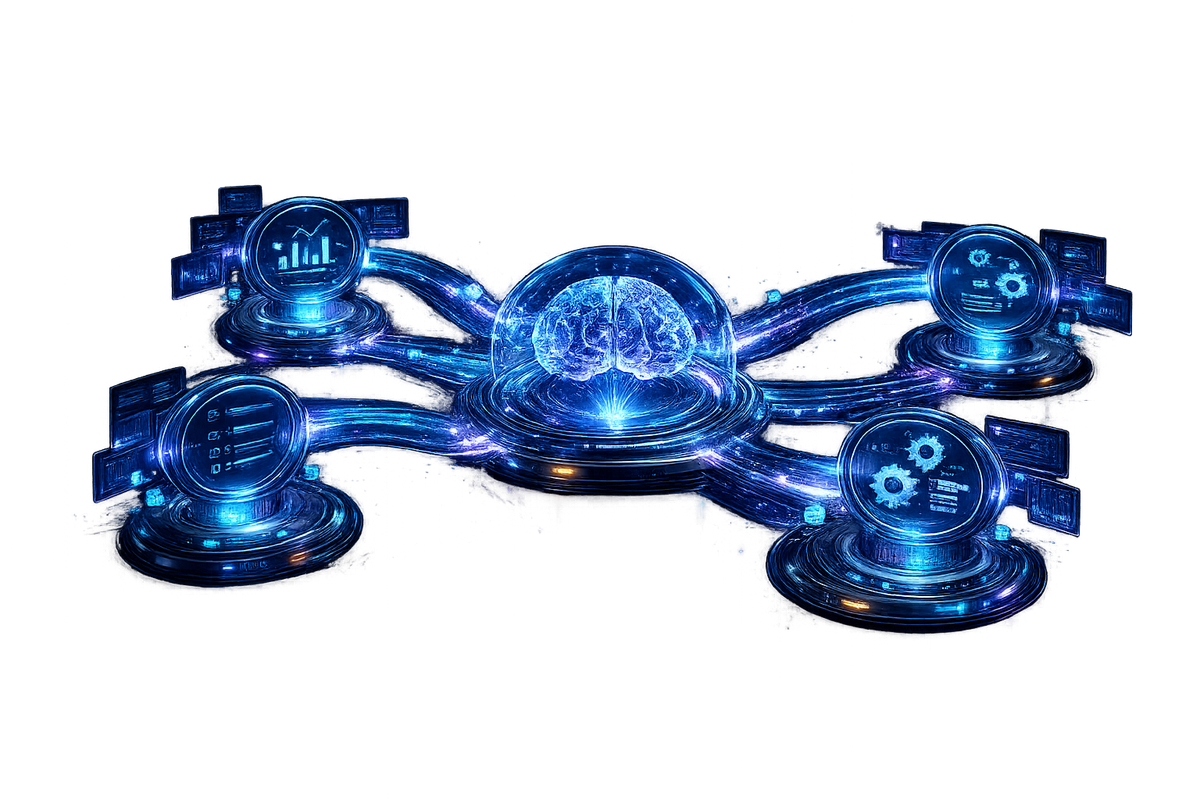
Step 1 — Goal Interpretation The agent receives a high-level business objective: "Increase sales conversions by 20% this quarter." It interprets not just the instruction but the underlying KPIs, constraints, available tools, and organizational context. This interpretation step is critical — it is where human intent translates into machine strategy.
Step 2 — Task Decomposition The agent breaks the goal into a structured sequence of actions: analyze the current sales funnel, identify drop-off points, generate optimization strategies, prioritize the highest-impact interventions, and execute them in the correct order. This decomposition happens automatically, without a human mapping out every step.
Step 3 — Multi-System Execution The agent interacts with every relevant system simultaneously. It extracts lead data from the CRM, launches campaigns through the marketing platform, pulls performance metrics from the analytics tool, and reports outcomes — all in a single coordinated workflow that would previously require three or four team members to manage manually.
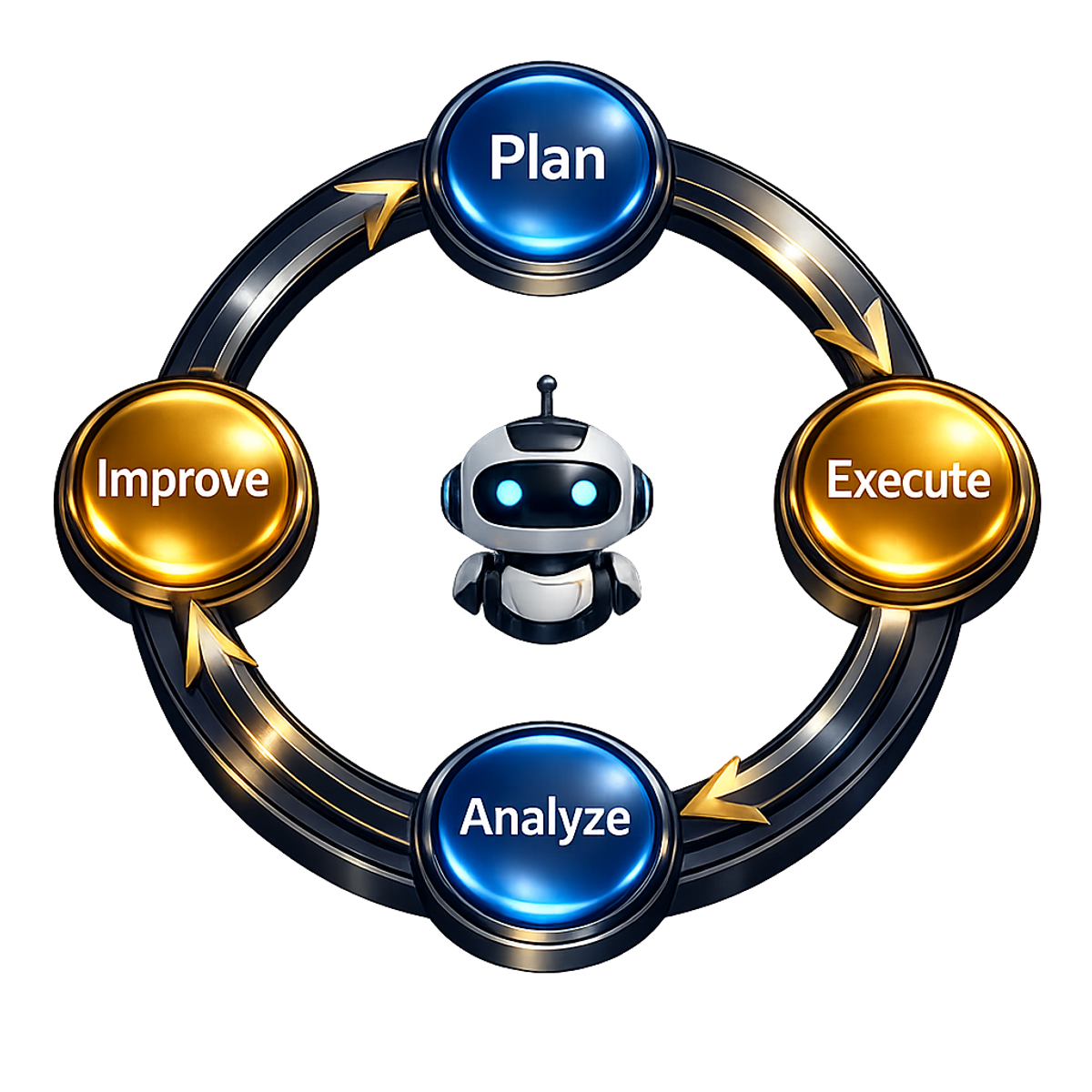
Step 4 — Continuous Optimization Unlike static automation that executes the same script regardless of results, AI agents monitor performance in real time, detect what is and is not working, and dynamically adjust their strategy. This creates a self-improving closed loop: Plan → Execute → Analyze → Improve → Repeat. Each cycle makes the next one more effective.
Key Use Cases Delivering Measurable Impact in 2026
AI agents are not theoretical. They are already generating quantifiable business results across industries.
Customer Support AI agents now handle 80 to 90 percent of customer queries with contextual, human-like responses — not keyword matching. They access order histories, process refunds, update account information, and escalate genuinely complex cases with full context already prepared for the human agent. The result is 24/7 support coverage with near-zero wait times and dramatically reduced support headcount requirements.
Sales and Lead Generation Agents autonomously scrape and qualify leads, build personalized outreach sequences, run A/B tests on messaging, predict conversion likelihood, and follow up automatically based on engagement signals. Sales teams using agent-assisted pipelines are reporting significantly higher conversion rates with smaller teams — because every lead receives the right message at the right time without manual effort.
E-commerce Operations In retail, agents manage dynamic pricing adjustments based on competitor data and inventory levels, generate personalized product recommendations at the individual customer level, and forecast demand to optimize stock positioning across warehouses. These are workflows that previously required dedicated analyst teams and still operated on delay — agents execute them continuously and in real time.
Data Intelligence and Decision Support Rather than producing static reports that a human must interpret, AI agents pull data from multiple sources, synthesize it into actionable insights, and proactively recommend specific actions. Leadership teams are using agent-generated intelligence to make faster, better-informed decisions without waiting for weekly reporting cycles.
Why Businesses Are Moving Away from SaaS — The Economic Case
The adoption of AI agents is being driven by concrete economic and operational advantages that are difficult to argue against once demonstrated.
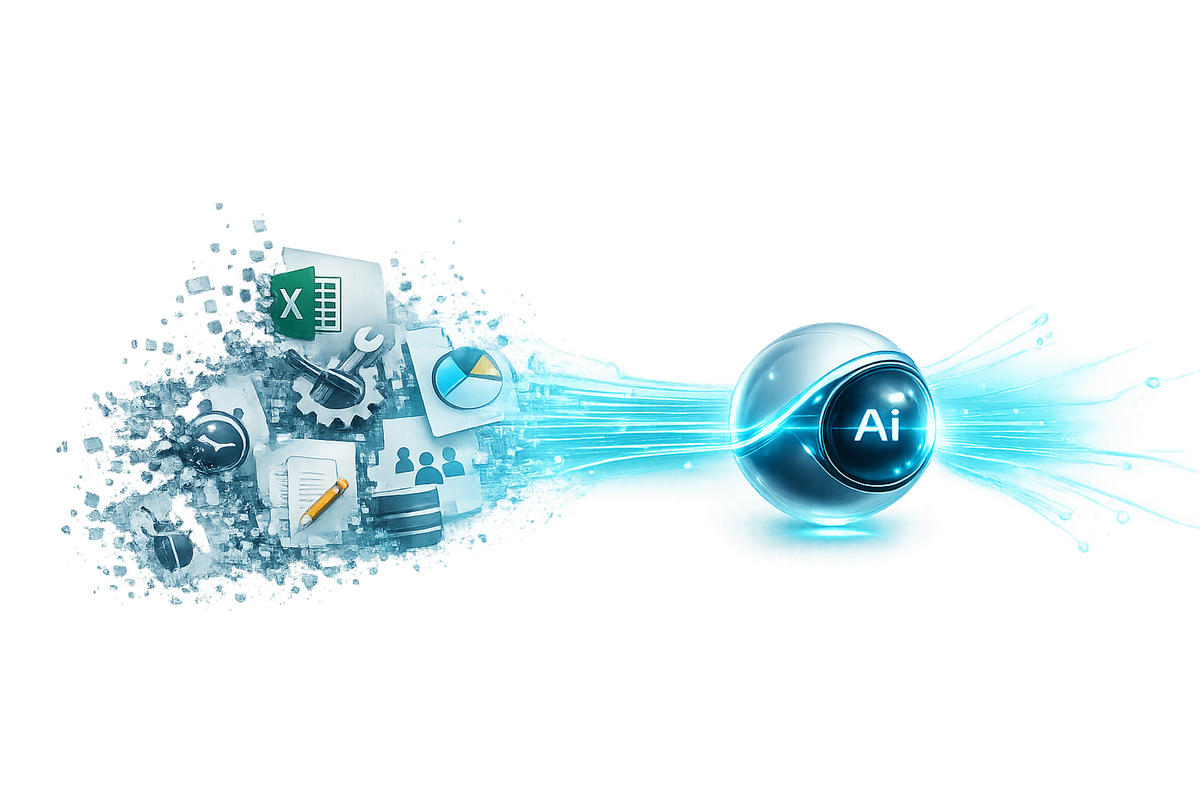
Cost Efficiency: Instead of paying for multiple SaaS subscriptions, integration middleware, and the operational teams required to manage them, businesses are consolidating around agent orchestration layers that perform the same work at significantly lower total cost. Major enterprises are already reporting SaaS license reductions of 40 to 50 percent.
Speed and Continuous Availability: AI agents execute tasks instantly and operate continuously — no shift changes, no approval delays, no context-switching costs. Workflows that previously took days to complete due to human scheduling constraints are being executed in hours or minutes.
Unified Intelligence: AI agents create a single intelligent layer across all systems, eliminating the data silos that plague multi-tool SaaS ecosystems. Every system's data becomes accessible to every workflow — in real time.
Scalability Without Headcount Growth: Perhaps the most compelling economic argument is that AI agents allow organizations to scale their operational capacity without proportionally scaling their workforce. Growth no longer requires hiring — it requires better agent configuration.
Challenges and Limitations to Implement Carefully
AI agents are powerful, but responsible implementation requires confronting several real challenges that organizations frequently underestimate.
Output Reliability: LLM-powered agents can produce incorrect outputs, especially in edge cases or when given ambiguous instructions. Production deployments require robust validation layers, output verification mechanisms, and clear escalation paths for exceptions.
Security and Compliance: Autonomous systems interacting with sensitive enterprise data — financial records, customer information, health data — must be governed by strict encryption standards, role-based access controls, and full audit trails. Compliance requirements across healthcare, finance, and legal sectors add significant implementation complexity.
System Architecture Complexity: Building production-grade AI agents requires strong software architecture, scalable infrastructure, comprehensive monitoring, and ongoing maintenance. Organizations that treat agent deployment as a simple software installation consistently struggle to reach production reliability.
Human Oversight Remains Essential: In high-stakes domains — financial decisions, medical workflows, legal determinations — human approval checkpoints are not optional. The most effective deployments in 2026 are not fully autonomous but intelligently collaborative, with agents handling execution and humans retaining authority over critical decisions.
The goal is not full replacement of human judgment. It is human and AI collaboration — where each does what it does best.
The Future Beyond 2026
The trajectory of agentic AI points toward a business environment that is dramatically different from what most organizations are planning for. Multi-agent systems — where specialized agents collaborate with each other across an organization's entire operation — are already moving from research into production deployments. The next evolution will see agents coordinating not just within a company but across supply chains, partner networks, and regulatory environments.
By 2027, industry projections suggest that 60 to 80 percent of routine enterprise workflows will be handled autonomously. By 2030, the economic value unlocked by these systems is estimated at $2.9 trillion globally. Organizations that begin building agent capabilities now will have a compounding advantage — their systems will be more capable, more reliable, and more deeply integrated than those of organizations just beginning the transition.
We are moving toward a near-future where small, highly skilled teams augmented by AI workforces will out-execute organizations ten times their size. The competitive gap this creates will be decisive.
Conclusion
AI agents are redefining the role of software in business. What began as automation has evolved into genuine autonomy — systems that don't just assist human work but independently execute it, optimize it, and improve it over time.
The shift from SaaS to AI agents is not a distant possibility. It is happening now, and it is accelerating.
Businesses that adopt early will operate faster, spend less, and scale smarter. Those who delay risk being systematically outpaced by competitors that have already made AI-first operations their new baseline. The question is no longer whether to make this transition — it is how quickly and how thoughtfully you do it.
Written by