Google I/O 2026: Every Major Announcement That Matters for Developers
1. Introduction
Google I/O 2026 opened on May 19 at the Shoreline Amphitheatre in Mountain View, California — and if last year was about adding AI to everything, this year was about something fundamentally different: making AI the platform itself.
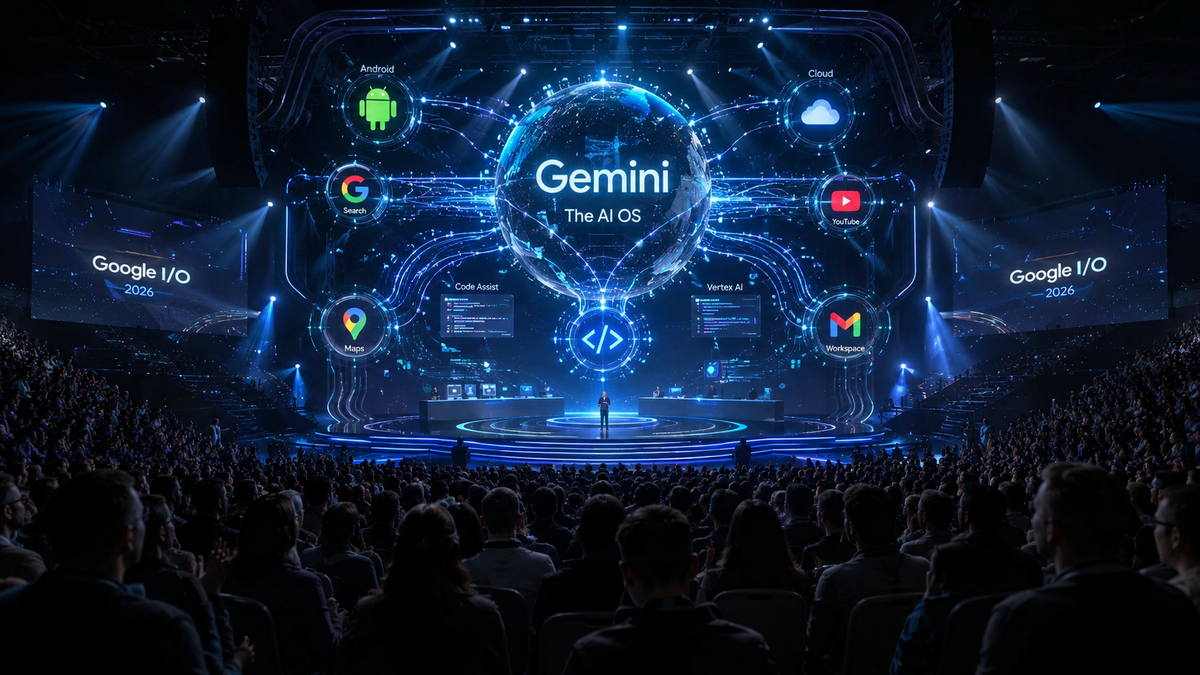
Google has transitioned from AI that simply assists developers, to agents that can independently navigate complex tasks across entire workflows. That sentence, from the Developer Keynote, is the most honest summary of what I/O 2026 stood for.
This wasn't a conference about new features. It was a conference about a new paradigm — one where Gemini isn't a product you add to your app, but the operating layer your entire development workflow runs on. Whether that framing holds up in practice is the question every developer will be answering over the next 12 months. But the announcements themselves are substantial, real, and worth understanding in depth.
Here is everything that matters.
2. The Big Theme: From AI Tools to Agentic Platforms
Before diving into individual announcements, the overarching message deserves its own section because it shapes how every other announcement should be read.
Google announced advancements to Antigravity, their agent-first development platform, moving beyond AI tools that just help developers write code, to agents that help developers act.
The practical implication: Google is no longer building AI features into its developer tools. It is rebuilding its developer tools around AI agents as the primary interface. Android Studio, Firebase, AI Studio, Chrome DevTools — all of them received agent-oriented upgrades at this year's I/O, not cosmetic AI additions.
For developers, this is the year to decide whether you're building with or around this paradigm.
3. Gemini 3.5 & Gemini Omni — The New Model Lineup
The model announcements were the foundation everything else rested on.
Gemini 3.5 Flash
Gemini 3.5 Flash combines frontier intelligence with the ability to perform agentic tasks. It surpasses 3.1 Pro in coding, agentic, and multimodal benchmarks, with the cost and speed of the Flash series at 4x faster than other frontier models in terms of output tokens per second. It is rolling out starting today in the Gemini app, Search, Antigravity 2.0, and the Gemini API.
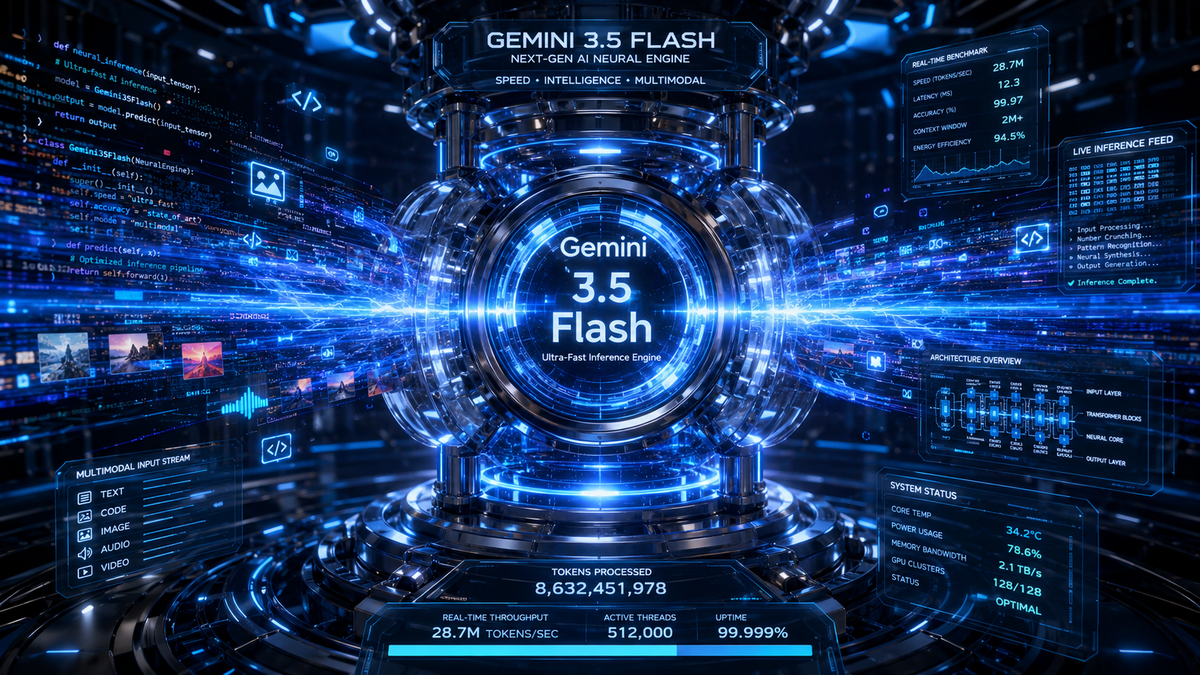
For developers building production agentic systems, this is significant. You now get frontier-level reasoning at Flash speed and pricing — a combination that wasn't available before.
Gemini 3.5 Pro
Gemini 3.5 Pro is currently in testing and will be available next month. Details are limited for now, but it is expected to push the ceiling further on reasoning, coding, and long-context tasks.
Gemini Omni
This is the headline model announcement. Gemini Omni is a new series of models that combines Gemini's reasoning capabilities with creation. Gemini Omni Flash today accepts image, audio, video, and text input and outputs video grounded in real-world knowledge that can be easily edited.
Gemini Omni is a unified multimodal framework capable of processing video, images, audio, and text simultaneously, potentially unlocking a wide range of Google services — from search and Android to Workspace, smart glasses, and future AI agents.
Think of Gemini Omni as Google's answer to the multimodal generation race: not just understanding any input type, but generating across them as well.
Model Comparison at a Glance
| Model | Speed | Strengths | Available |
| Gemini 3.5 Flash | 4x faster than frontier | Coding, agentic tasks, multimodal | Today |
| Gemini 3.5 Pro | Standard | Highest reasoning ceiling | Next month |
| Gemini Omni Flash | Fast | Multimodal creation, video output | Today |
| Gemma 4 (open-weight) | Variable | On-device, open-source tasks | Today (Android Bench) |
4. Antigravity 2.0 — Google's Agent-First Development Platform
Antigravity was Google's biggest developer platform announcement of the year, and it received a substantial upgrade.
Antigravity 2.0 and the CLI
With Antigravity 2.0 and the all-new Antigravity CLI, developers now have two powerful surfaces for incredible productivity gains. You can spin up specialized subagents to tackle complex workflows, all protected by built-in cross-platform terminal sandboxing, credential masking, and hardened Git policies.
The security story here is notable. Credential masking and hardened Git policies address some of the most common concerns around agentic systems operating in real development environments. Google is clearly thinking about production readiness, not just demos.
Managed Agents via the Gemini API
Managed Agents in the Gemini API removes the friction of infrastructure setup, delivering the power of the Antigravity agent harness via managed agents. A single API call provides a fully provisioned agent with a remote sandbox.
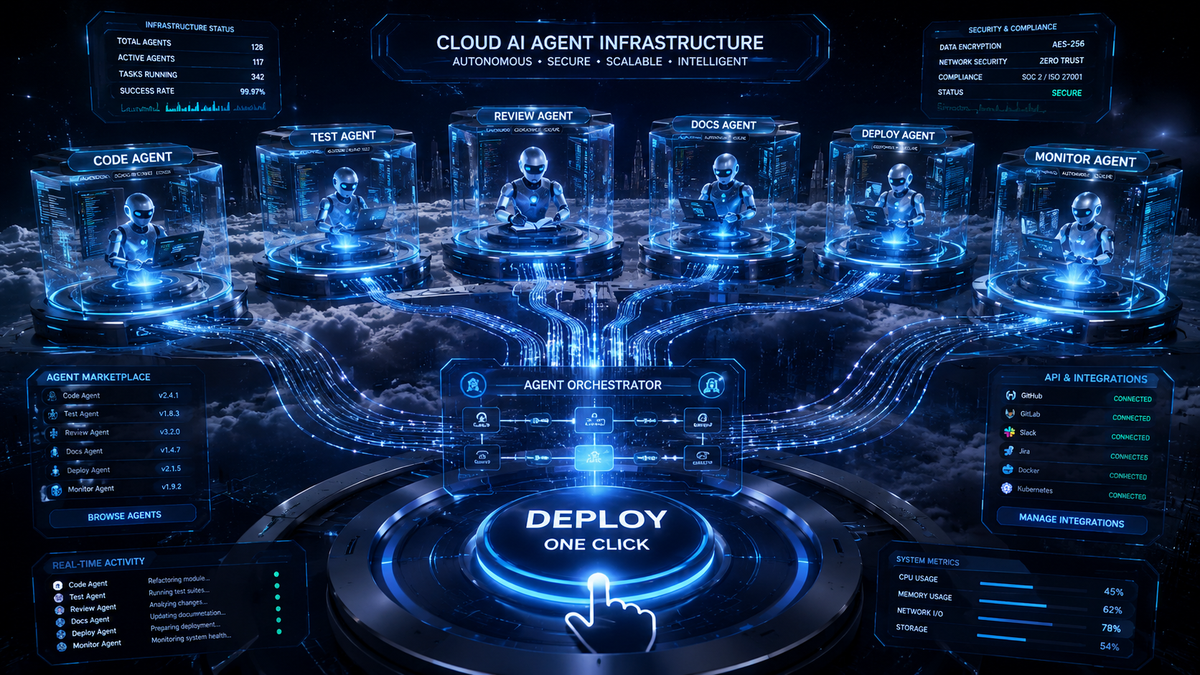
This is significant for teams who want the power of agentic infrastructure without building it themselves. One API call, one fully sandboxed agent. No DevOps overhead required.
Antigravity SDK
The new Antigravity SDK gives developers programmatic control over the Antigravity agent harness, so you can fully customize the agent and deploy it on your own infrastructure.
For teams with compliance requirements or infrastructure preferences, this is the self-hosted path — full control, your servers.
5. Google AI Studio Gets a Major Upgrade
AI Studio was already a powerful prototyping environment. At I/O 2026, it got closer to a full-stack development platform.
Google AI Studio now includes native Kotlin support to build Android apps. With Google Workspace integrations and a one-click deploy to Cloud Run along with support for Firebase services, you can now build and launch full-stack apps directly within AI Studio. You can also seamlessly export your complete project state to Google Antigravity.
The workflow this enables is compelling: prototype in AI Studio, deploy to Cloud Run with one click, hand off to Antigravity for ongoing development. The entire build-to-deploy cycle without leaving Google's ecosystem.
Gemini App Pricing Changes
The Gemini app is moving from daily prompt limits to a compute-used model that factors in the complexity of prompts, features used, and length of chat. Limits refresh every five hours until the weekly limit is reached.
Google AI Ultra now starts at $100 per month with 5x higher Gemini app usage limits than AI Pro. The previous $250 plan is now $200 with the same capabilities as before.
6. Android Development Goes Agentic
The Android announcements at I/O 2026 were some of the most practically useful for mobile developers.
Android CLI and Open-Sourced Skills
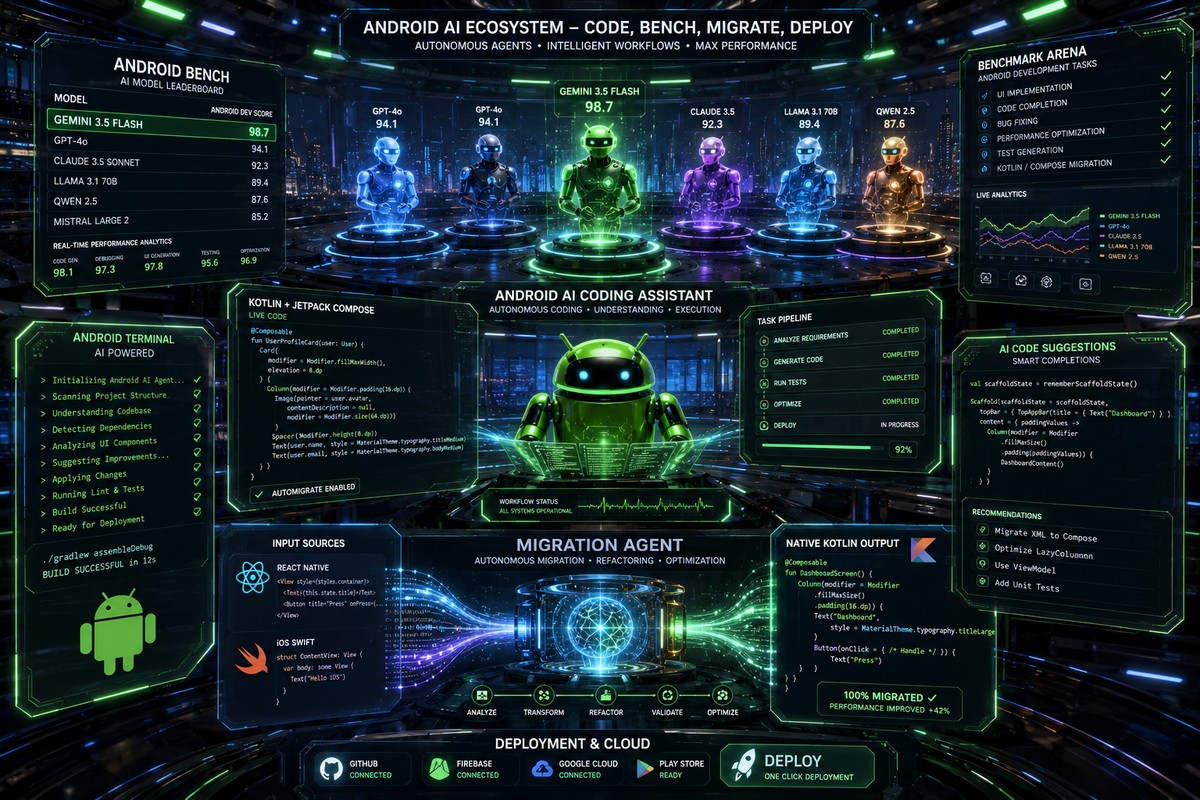
The stable Android CLI enables AI agents to tap directly into the capabilities of Android Studio. It can handle tasks like downloading the Android SDK, running apps on Android devices, and more, so developers can create high-quality Android apps using any agent, LLM, and tool of their choice. Google also open-sourced Android skills to help LLMs execute best practices for complex workflows and APIs, like migrating to Jetpack Compose and Jetpack Navigation 3 migration.
Open-sourcing Android skills is a meaningful move — it means any LLM, not just Gemini, can now leverage Google's best practices for Android development tasks.
Android Bench — LLM Leaderboard for Android
Android Bench is Google's LLM leaderboard specifically for Android development tasks. Open-weight models such as Gemma 4 were added to the leaderboard this week, so developers can see how different LLMs compare on Android-specific benchmarks.
For teams evaluating which model to use for their Android development agents, this is exactly the kind of benchmark that was missing.
Migration Agent — React Native and iOS to Kotlin
This may be the single most practically impactful announcement for many mobile teams. A new Android Studio feature migrates app code to a native Kotlin Android app, regardless of whether the source is React Native, a web framework, or iOS. The agent analyzes code and does the heavy lifting, turning migrations that would have taken weeks into just hours.
If your team has been putting off a migration from React Native or a cross-platform framework to native Kotlin — this changes the calculation entirely.
7. Web Development in the Agentic Era
The web platform announcements were forward-looking and technically ambitious.
WebMCP — A New Open Web Standard
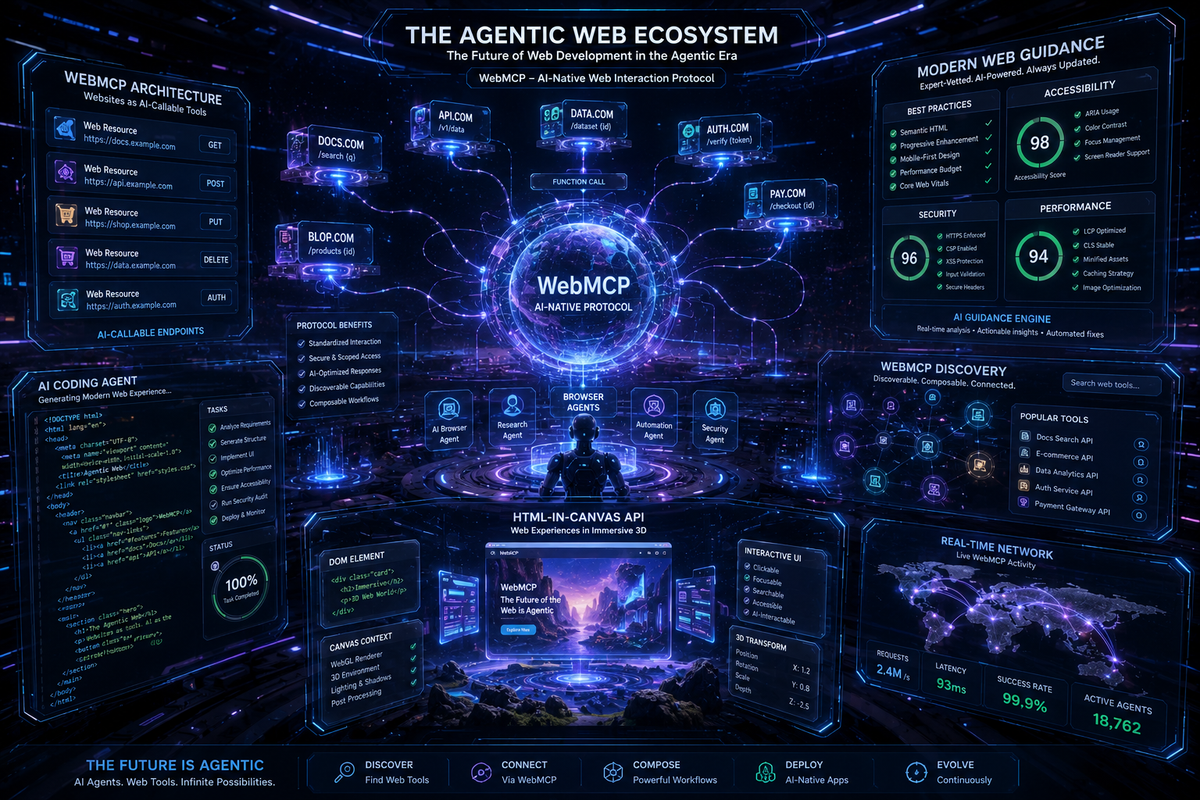
WebMCP is a proposed open web standard that allows developers to expose structured tools, like JavaScript functions and HTML forms, so browser-based AI agents can execute complex tasks with greater speed, reliability, and precision. The experimental WebMCP origin trial starts in Chrome 149, with support for Gemini in Chrome coming soon.
WebMCP is potentially one of the most significant long-term announcements from I/O 2026. If it gains adoption, it means web applications will be natively consumable by AI agents — turning every web app into a tool an agent can call. This is the foundation for the agentic web.
Modern Web Guidance
Modern Web Guidance helps developers build more performant, accessible, and secure web experiences by providing coding agents with a set of expert-vetted skills. Launching in early preview, it supports over 100 use cases and integrates directly with Baseline. Install with a single click in Antigravity or via CLI with npx modern-web-guidance install.
Think of this as a curated, always-updated set of best practices that your coding agent can pull from — so it's building with current patterns, not outdated ones from its training data.
HTML-in-Canvas API
With the new HTML-in-Canvas API, available in origin trial, developers can build immersive, 3D experiences that remain fully searchable, accessible, and interactable. By integrating real DOM elements directly into a canvas with WebGL and WebGPU, this declarative API brings high-fidelity, app-like performance that seamlessly interacts with built-in browser features.
This bridges a long-standing gap between rich canvas-based experiences and the accessibility and searchability of standard DOM. Game developers and immersive experience builders should pay close attention.
8. Chrome Gets Agent-Aware DevTools
Chrome DevTools for agents brings Chrome DevTools capabilities to AI agents, helping developers scale their workflow with verifying, debugging, and optimizing code in real time. Agents can automate quality audits, emulate real-world user experiences, hand over sessions with auto-connect, and more without manual oversight.
The ability for an agent to run quality audits, emulate real device experiences, and debug code without a human in the loop is a meaningful step toward fully automated QA pipelines.
9. Search, Gemini App & Consumer AI
While these are more consumer-facing, they have direct implications for developers building on Google's platforms.
AI Mode Powered by Gemini 3.5
AI Mode in Google Search is now powered by Gemini 3.5 Flash. A new intelligent search box expands the more you type, reflecting how people now write longer, more conversational queries. AI-powered query suggestions go beyond autocomplete by anticipating intent.
Information Agents in Search
New information agents work in the background 24/7 to keep users updated on whatever matters most to them, intelligently looking across everything on the web — blogs, news sites, social posts, real-time finance, shopping, and sports data. Available to Google AI Pro and Ultra subscribers this summer.
Daily Brief and Gemini Spark
Gemini Spark integrates with Gmail, Docs, and other Google Workspace apps before expanding to other third-party tools via MCP. Daily Brief is a personalized digest of the day ahead, sifting through Gmail, Calendar, and Tasks to prioritize and organize what you need to do, while suggesting next steps.
Universal Cart
Universal Cart is a Gemini-powered shopping cart and agentic hub for shopping across the Gemini app, YouTube, and Gmail. Once a product is added, Google finds deals, price drops, price history insights, and stock alerts. Built on Google Wallet, it understands payment method perks, loyalty information, and merchant offers.
10. Hardware — Android XR Smart Glasses
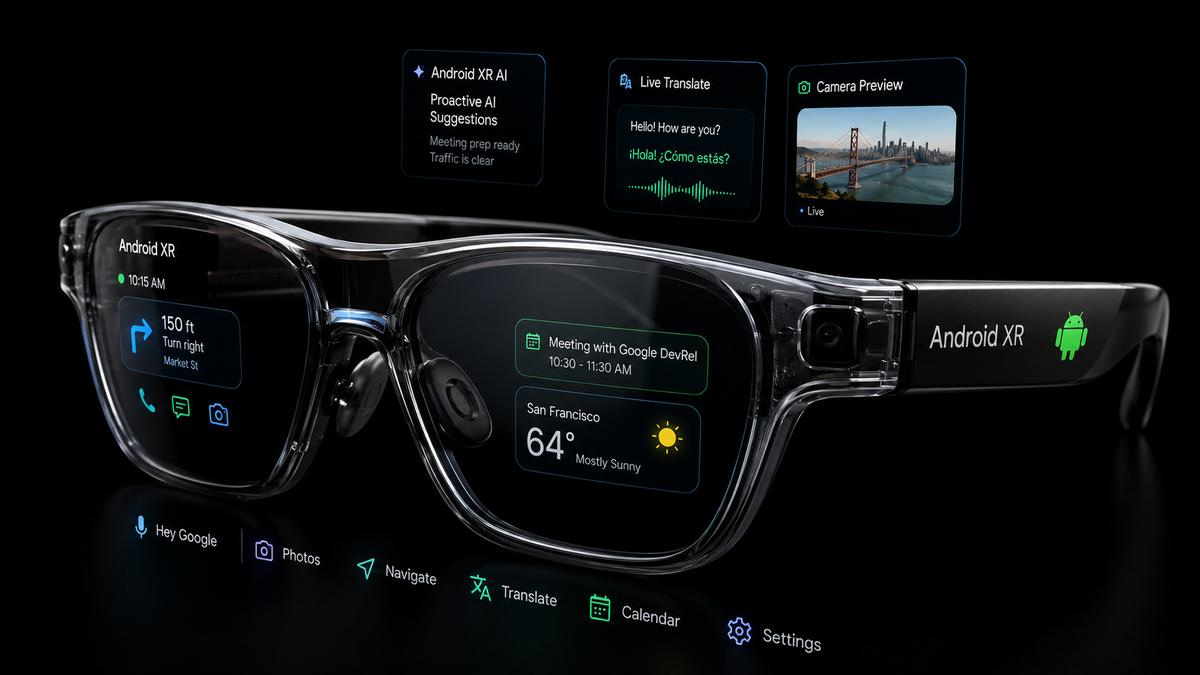
Android XR smart glasses are the hardware category most likely to produce a product shipping in 2026. Four partners have been named: Samsung, XREAL (Project Aura), Warby Parker, and Gentle Monster. XREAL's Project Aura is an optical see-through headset with a 70-degree field of view, built on Qualcomm silicon, targeting a 2026 launch.
For developers, Android XR represents a new surface to build for — and the XR Developer Preview is worth exploring now if wearable and spatial computing is on your roadmap.
11. Quick-Fire Announcements Worth Noting
| Announcement | What It Is |
| Gemma 4 on Android Bench | Open-weight model now benchmarked on Android tasks |
| Ask YouTube | Conversational search across YouTube content |
| Co-Scientist | Collaborative AI research partner built with Gemini |
| Google Stitch | AI design tool with guided layout building |
| Google Pics | New AI-powered design tool for consumers |
| WeatherNext AI | Helped predict Hurricane Melissa's landfall accurately |
| LiteRT-LM | Blazing fast on-device GenAI inference |
| Googlebook | AI-native laptop built on Android, arriving this fall |
12. What This Means for Developers
Let's be direct about the implications of everything announced today.
| Area | Implication |
| Agent development | Antigravity 2.0 + Managed Agents = production-grade agentic infrastructure without the setup burden |
| Android development | Migration Agent + Android CLI dramatically reduce time cost of native Kotlin adoption |
| Web development | WebMCP could redefine how web apps are consumed by AI agents — worth watching closely |
| Model selection | Gemini 3.5 Flash is now the obvious choice for cost-sensitive agentic workloads |
| Tooling | AI Studio's full-stack capabilities make it viable as a primary development environment |
| Open source | Open-sourced Android skills means non-Gemini models benefit from Google's Android expertise |
The developers who will get the most from these announcements are the ones who lean into the agentic workflow rather than treating these tools as better autocomplete. The platform is being designed for agents as first-class citizens. Building against that grain will get harder over time.
Final Thoughts
Google I/O 2026 was one of the most developer-dense I/O events in years. Unlike recent years where many announcements felt consumer-first with developer APIs as an afterthought, this year's developer keynote delivered concrete tools, open standards, and production-ready infrastructure.
The three announcements that will have the longest-lasting impact are:
Gemini 3.5 Flash — the model that makes frontier-quality agentic systems economically viable at scale.
Antigravity 2.0 — the platform that makes orchestrating those agents actually practical.
WebMCP — the open standard that, if it achieves adoption, will make the entire web natively agent-accessible.
Everything else builds on or feeds into those three pillars. Google isn't trying to be the best AI assistant anymore. It's trying to be the infrastructure layer that all AI-powered development runs on. Whether that bet pays off will become clearer over the next 12 months — but the foundation laid at I/O 2026 is the most coherent developer-first story Google has told in a long time.
At CognyX AI, we track every major development in AI infrastructure so our clients don't have to. If you're evaluating how Gemini 3.5, Antigravity, or agentic pipelines fit into your product roadmap, our team is ready to help you build with what's actually shipping — not what's still on a slide.
Written by