Agentic AI is the Default Now — Here's What Developers Must Rearchitect
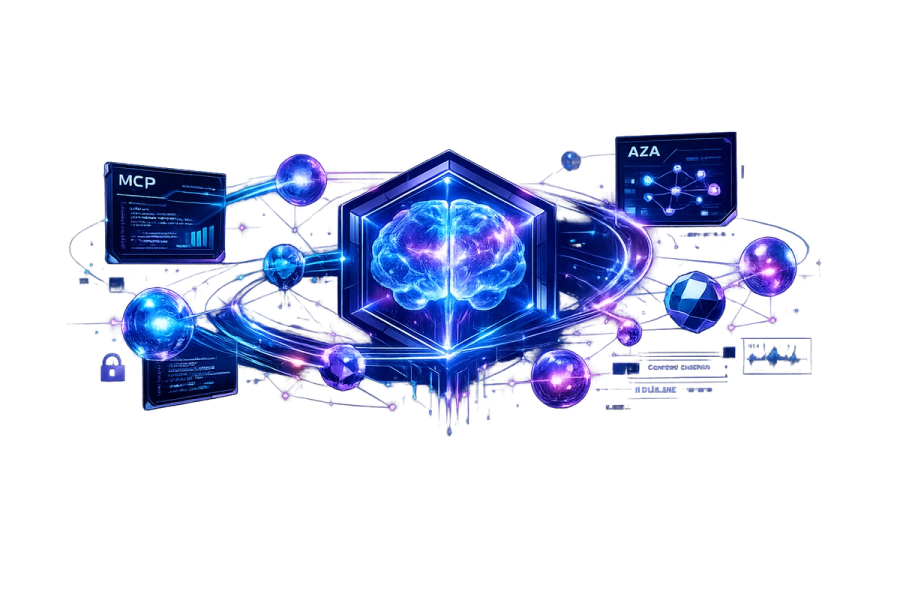
AI agents have moved from demos to production infrastructure. But most codebases are still built for a world where AI is a chatbot bolted onto the side. That mismatch is becoming a serious technical debt problem. This post breaks down exactly what needs to change — from how you handle memory and state, to protocols, permissions, and the new shape of your CI/CD pipeline.
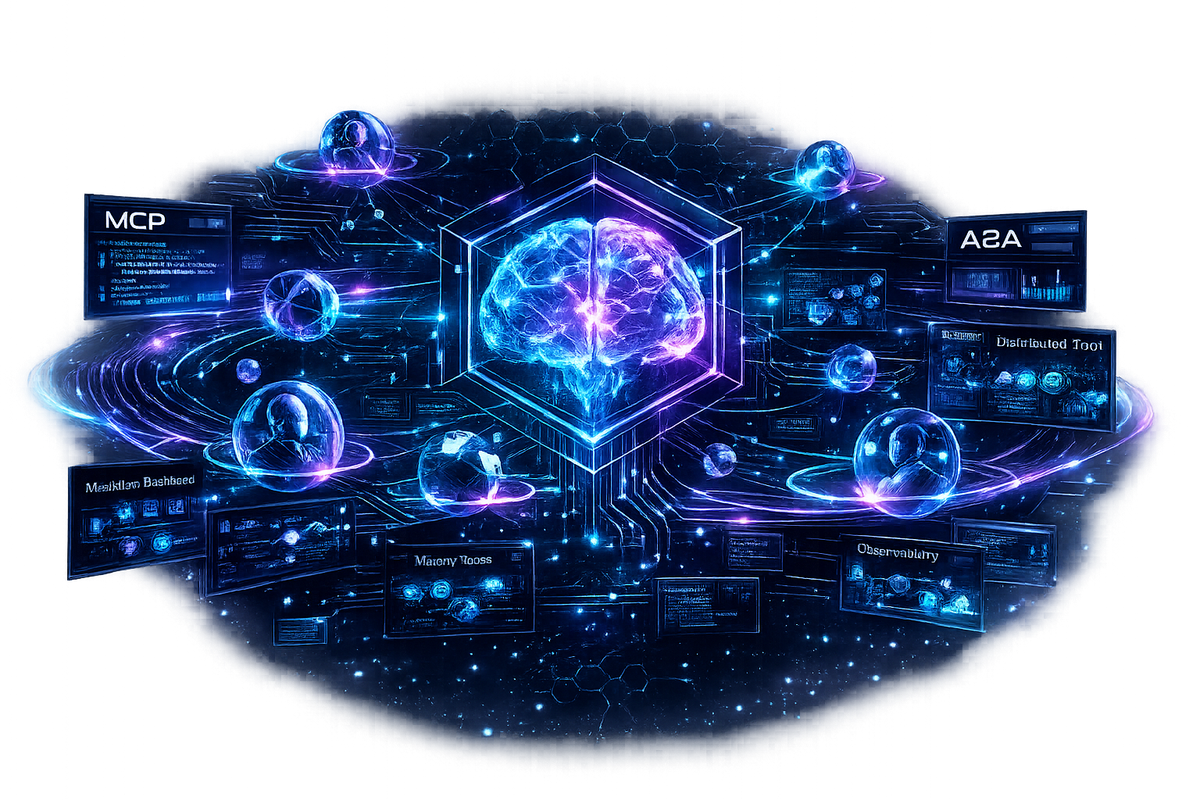
The Shift Already Happened. Most Teams Missed It.
There's a version of this conversation that happened in 2023: "Should we add an AI assistant to our app?" That question is dead. The question of 2026 is: "How do we build systems where AI agents are first-class citizens, not afterthoughts?"
The gap between those two questions represents an entire architectural era. And most teams are still building with the old mental model — LLM as a smart autocomplete, plugged into a request-response interface, wrapped in a chat UI. Meanwhile, production systems at forward-thinking companies are running agents that write code, execute tests, open pull requests, deploy to staging, monitor their own outputs, and escalate to humans only when confidence drops below a threshold.
That is not a chatbot. That is a software system. And it needs to be architected like one.
The shift is real and the numbers back it up. Engineering teams that once treated AI as a feature are now treating it as infrastructure. Tasks that required weeks of cross-team coordination are collapsing into focused working sessions between engineers and agent pipelines. The constraint on agentic AI is no longer capability. It is control — and control is entirely an architecture problem.
Why Your Current Architecture Breaks Under Agentic Load
The patterns we used for traditional software — request in, response out, stateless between calls — were designed for a world where the application did exactly what the code said, every time, deterministically. Agents break every assumption in that model.
Agents have long-running, non-deterministic execution. A traditional API call takes milliseconds and returns a predictable type. An agent might run for minutes, make dozens of tool calls, branch on intermediate results, and produce output that differs every run even with the same inputs. Your timeout configurations, your retry logic, your error handling — none of it was designed for this.
Agents need memory across sessions. A stateless service that forgets everything between requests is fine for a CRUD API. It is crippling for an agent. Without persistent memory, every agent session starts from zero — re-reading the same documents, re-establishing the same context, re-making the same mistakes. This is the single biggest source of wasted compute in poorly architected agentic systems.
Agents interact with the real world. Traditional applications have defined I/O boundaries. Agents call APIs, write files, send emails, execute database queries, and trigger other agents. Every one of those interactions is a potential blast radius. A bug in a traditional app corrupts state. A bug in an agent pipeline can corrupt state, send real communications, spend real money, and trigger cascading effects across connected systems.
Agents need to trust and be trusted. In a traditional microservices setup, you define service-to-service auth once and forget it. In an agentic system, every tool call is a permission decision. What is this agent allowed to read? Write? Execute? Delete? Those decisions need to be made at the call level, not the service level.
What Needs to Rearchitect: 6 Core Areas
1. Memory Is Infrastructure, Not a Feature
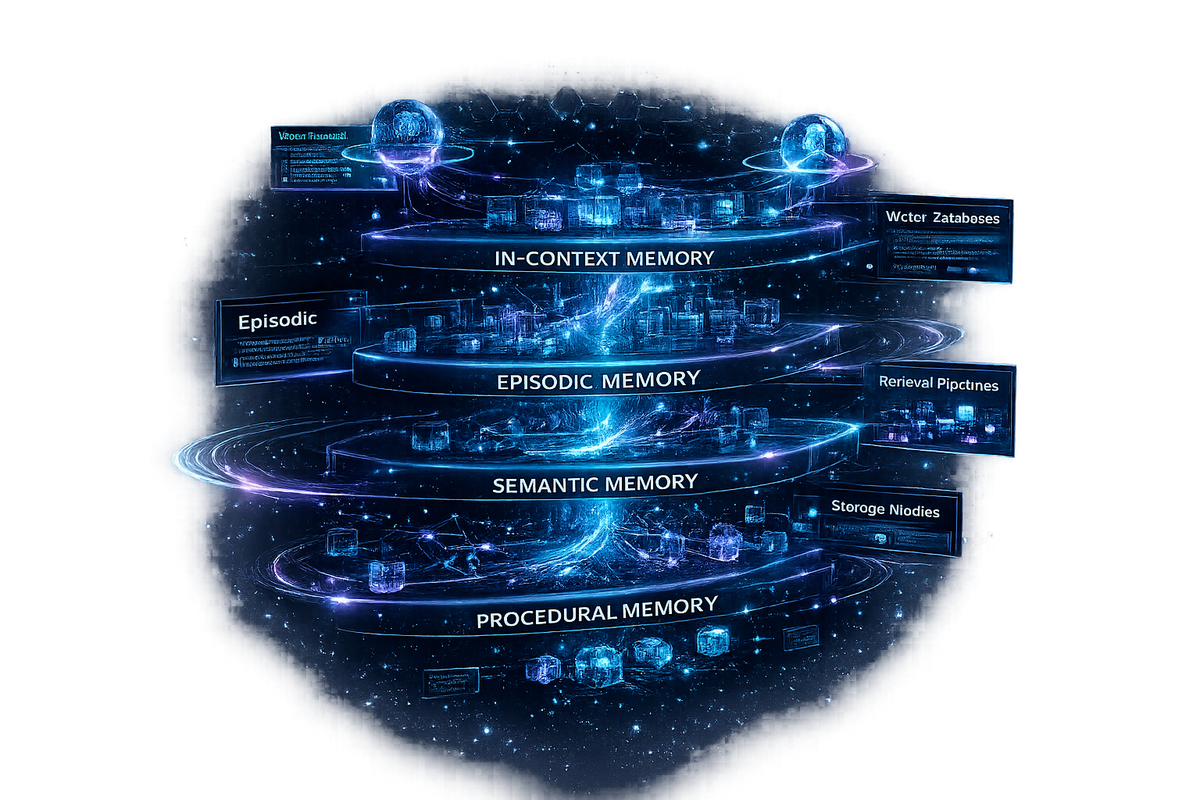
The single most common architectural mistake in early agentic systems is treating memory as an afterthought. A vector database bolted on after the fact, or worse — stuffing everything into the context window and hoping the model figures it out.
Memory in agentic systems has four distinct layers, and each needs a different solution:
In-context memory is what fits in the current context window. This is fast but expensive, lossy on long runs, and ephemeral. Use it for immediate working state only.
Episodic memory is the record of what the agent has done in recent sessions — actions taken, results observed, decisions made. This should be stored in a fast retrieval database (vector or hybrid) and surfaced automatically at the start of each session. Think of it as the agent's short-term recall.
Semantic memory is the agent's knowledge base — documents, codebases, domain facts. This is your RAG layer: chunked, embedded, and queryable. Most teams have this. Most teams stop here and call it done. It's not.
Procedural memory is how the agent knows what to do — its tools, its workflows, its decision patterns. In 2026, this lives in your MCP server definitions, your agent system prompts, and increasingly in fine-tuned model weights for domain-specific agents.
The rearchitecture question is: where does each layer live, who owns it, how does it get updated, and how does the agent know when a memory is stale?
2. MCP Is Not Optional Anymore
If you're still hand-rolling tool wrappers for every LLM integration — custom API adapters per tool, bespoke function schemas, model-specific formatting — you're building on quicksand.
The Model Context Protocol, released by Anthropic in late 2024 and now a Linux Foundation standard supported by every major AI provider, has become the de facto interface layer between agents and tools. By early 2026, it crossed 97 million monthly SDK downloads. OpenAI, Google, Microsoft, and Amazon all support it natively. The ecosystem has over 9,000 registered MCP servers.
The architectural shift MCP demands is simple to describe and hard to execute: every external capability your agent needs — databases, APIs, file systems, CI/CD pipelines, internal services — should be exposed as an MCP server with a defined schema, not as bespoke glue code.
What does this buy you? Tool integrations that dropped from days to minutes in real production migrations. Context that doesn't bloat because MCP handles tool discovery and schema negotiation cleanly. Security that's consistent because every tool call goes through the same permission layer. And portability — swap out the underlying model without rewriting your integrations.
The three-layer model that is emerging as standard: model (swappable), framework (LangGraph, CrewAI, AutoGen, etc.), and MCP servers (your tool integrations). Each layer is independently replaceable. That is the architecture you should be building toward.
3. Multi-Agent Coordination Needs A2A, Not Custom Glue
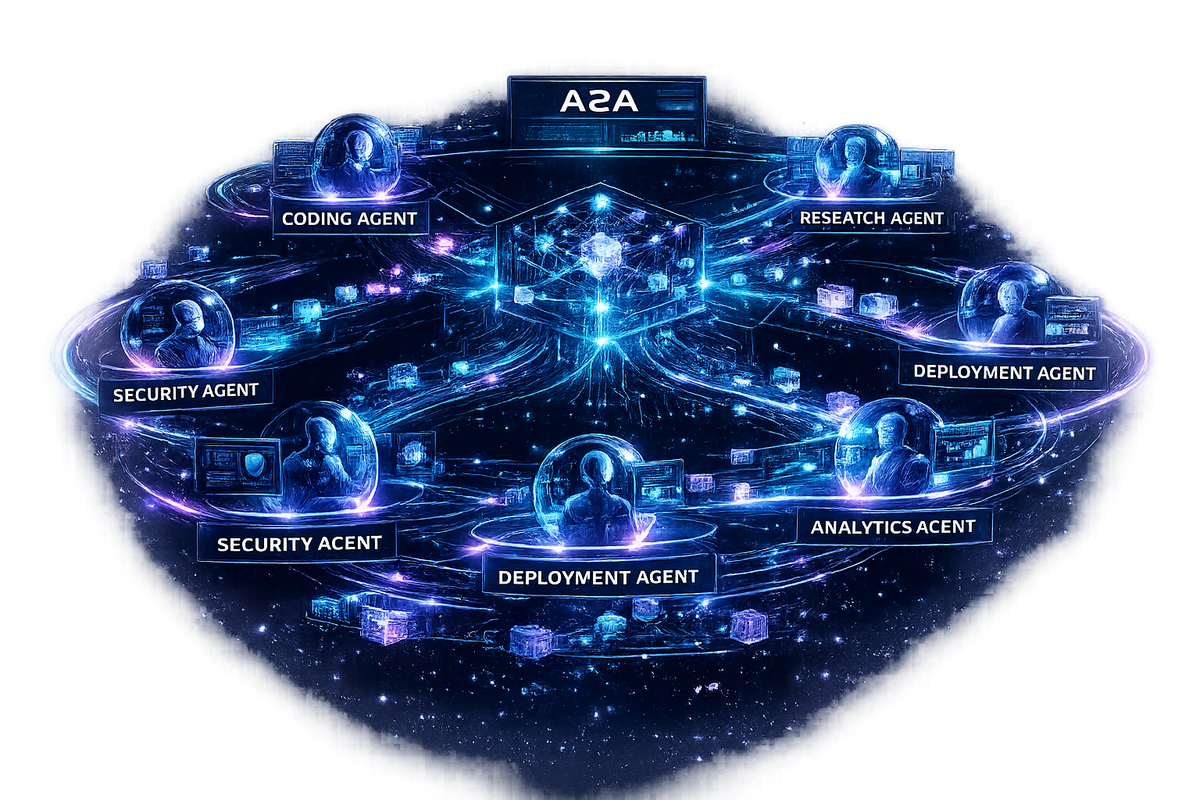
Single-agent systems are reaching their ceiling. The tasks worth automating in 2026 are not "summarise this document." They are "research this market, write the competitive analysis, identify the top three risks, create a slide deck, schedule the review meeting, and notify the stakeholders." That is not one agent's job. That is a team of specialised agents coordinated intelligently.
The problem most teams hit when they try to build multi-agent systems is that connecting agents requires writing bespoke coordination code for every agent pair. Swap one agent for another and you rewrite the orchestration layer. It doesn't scale.
Google's Agent-to-Agent protocol (A2A), now a Linux Foundation standard, is the answer to this problem. Where MCP gives an agent its hands (tools), A2A gives agents the ability to talk to each other — regardless of their underlying framework, model, or vendor. Each agent publishes an Agent Card describing what it can do and how to reach it. Tasks flow between agents as structured objects with defined inputs, outputs, and status lifecycles. Agents stream real-time updates to each other and push webhooks when long-running tasks complete.
The rearchitecture move here is to stop building monolithic agent pipelines and start building agent networks. Specialised agents — a research agent, a code agent, a security review agent, a deployment agent — each with a defined scope, exposed via A2A, coordinated by an orchestrator. That is the architecture that scales.
4. Permissions Need to Become Per-Tool, Not Per-Service
In traditional microservices, you set up service accounts and call it done. In an agentic system, that model creates catastrophic blast radii.
An agent with broad write access to your production database, your email system, and your deployment pipeline is one bad prompt injection away from a very bad Tuesday. The fact that the agent is "trusted" at the service level means nothing when the threat is the agent itself acting on poisoned instructions.
The rearchitecture here is moving from coarse-grained service permissions to fine-grained, per-tool, per-call authorisation. Every tool call the agent makes should carry the minimum permissions needed for that specific action. Read operations get read tokens. Write operations require explicit per-call authorisation. Destructive operations — deletes, deployments, external communications — require human confirmation or a separate verification step.
This means your permission model needs to be built into your MCP server layer, not layered on top of it. Every MCP server should enforce its own scope boundaries. The orchestrator should not be able to grant permissions that individual servers don't recognise.
Practically: implement read/write separation at the tool level. Audit every tool call. Build escalation paths for high-risk actions. And treat prompt injection as a first-class threat, not an edge case — because agents that can be instructed to call tools are agents that can be weaponised by malicious content in the data they process.
5. Observability Is Now Your Most Critical Engineering Problem
You cannot debug an agent with console.log. You cannot monitor a multi-agent pipeline with uptime checks. The entire observability stack needs to be rethought for systems where the execution path is non-deterministic, the intermediate states are LLM reasoning traces, and a single user request spawns dozens of tool calls across multiple agents.
What agentic observability actually looks like in 2026:
Trace every agent run end-to-end. Every tool call, every LLM invocation, every intermediate result, every routing decision — logged with timestamps, inputs, outputs, token counts, and latency. This is not optional in regulated environments; compliance requirements for AI agent actions are tightening fast, and audit trails are non-negotiable.
Track confidence and uncertainty. Traditional services either work or throw an exception. Agents can be wrong with high confidence and right with low confidence. Your monitoring needs to track uncertainty signals — when is the agent asking for clarification, when is it hallucinating, when is it stuck in a loop.
Monitor for drift. Agent behaviour can degrade gradually as the world changes — external APIs update, data distributions shift, model weights change. You need baseline benchmarks for your agents' key behaviours and continuous evaluation against them.
Build feedback loops. Every time a human reviews agent output and corrects it, that correction is a training signal. Build the infrastructure to capture it.
The tools landscape here is still maturing, but the combination of OpenTelemetry for tracing, purpose-built agent observability platforms, and structured logging of LLM calls is becoming the baseline stack.
6. Your CI/CD Pipeline Needs an Agent-Aware Layer
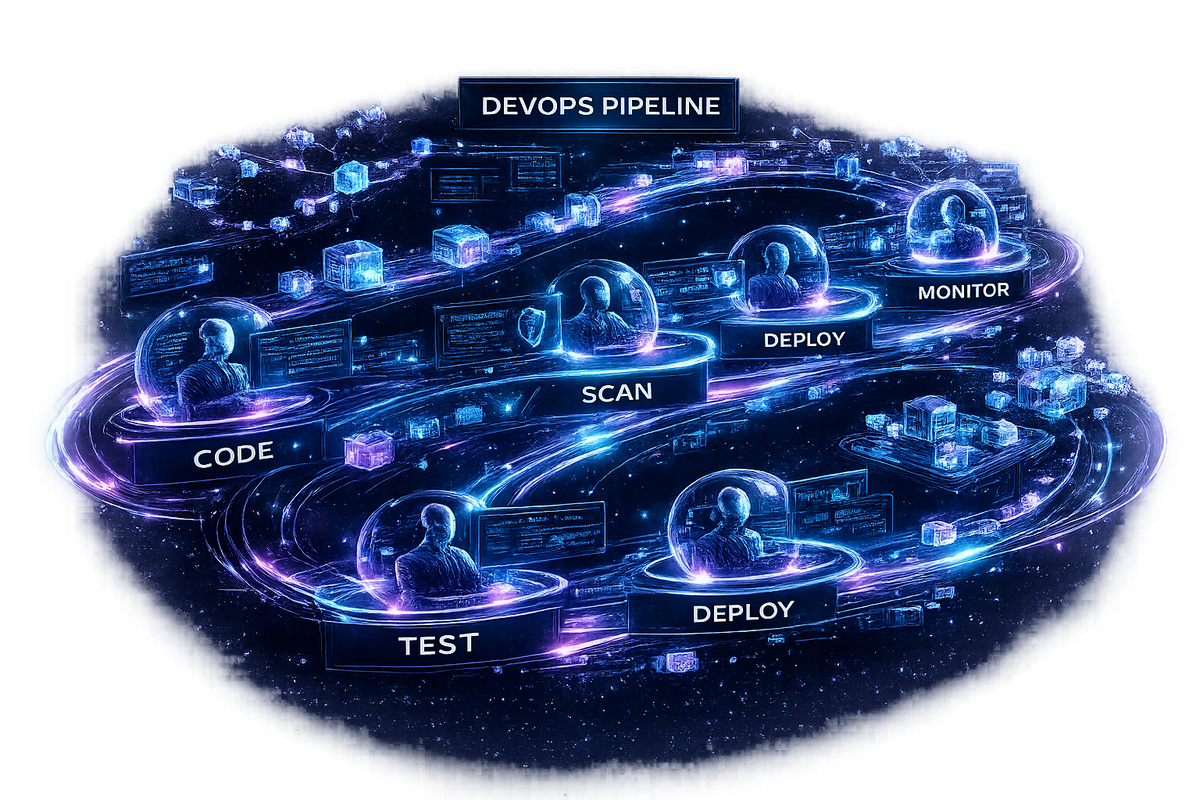
The traditional CI/CD pipeline ends at deployment. The agentic CI/CD pipeline adds a new layer before, during, and after: agents that help plan features, draft implementation, write tests, review their own code, check for security issues, and monitor post-deployment behaviour.
This is already happening. Engineering teams are running agents to draft feature branches, execute tests, summarise failures, propose fixes — and then routing to a human reviewer only for final correctness, security, and production risk assessment. The judgment shifts upward. The repetitive execution gets compressed.
What this means for your pipeline architecture:
Agent runs need sandboxed execution environments. An agent writing and running code in your CI/CD pipeline needs strict isolation — it should not have access to production credentials, cannot reach the internet indiscriminately, and must operate within a defined resource budget.
Agent outputs need a separate validation gate before merge. "The agent said it's correct" is not a passing test. Your pipeline needs automated evaluation of agent-produced artifacts — test coverage, security scanning, style compliance — before they reach human review.
Human-in-the-loop checkpoints need to be first-class pipeline stages, not afterthoughts. Define explicitly: which decisions require human sign-off, what the escalation path looks like, and how long an agent waits before timing out and flagging for review.
The Architecture Pattern That Is Actually Emerging
After cutting through the noise, the production agentic architecture in 2026 looks like this:
A thin orchestration layer coordinates specialised agents via A2A. Each agent connects to its tools via MCP servers with scoped permissions. Memory is layered — episodic in a fast vector store, semantic in a RAG pipeline, procedural in tool definitions. Every tool call, agent decision, and LLM invocation is traced via OpenTelemetry and fed into an evaluation pipeline. Human-in-the-loop is a defined API surface, not an escape hatch.
The engineer's job in this architecture is not writing the code that agents produce. It is designing the agent network, defining the permission model, building the evaluation pipeline, and maintaining the guardrails. The core skill becomes systems thinking, not just syntax.
What You Should Do This Week
Audit your current tool integrations. If you have bespoke LLM tool wrappers that are not MCP-compatible, start migrating the highest-traffic ones first.
Map your memory layers. What context does your agent need across sessions? Where is it stored today? Is it stale? Build a simple episodic memory store if you don't have one.
Define your permission boundaries. For every tool your agent can call, write down the minimum permission it actually needs. Where that list diverges from current implementation, that's your blast radius.
Add tracing to your agent runs. Even simple structured logging of tool calls, inputs, outputs, and latency is dramatically better than nothing. Start there.
Pick one multi-agent workflow and implement it with A2A. Not everything. One. The experience of building it will reshape how you think about the rest of your architecture more effectively than anything else you can read.
The Bottom Line
Agentic AI is not a new feature to add to your existing architecture. It is a new execution model that breaks the assumptions your architecture was built on. The teams that will build the best systems in the next two years are not the ones with the best models. They are the ones that rethink memory, permissions, observability, and coordination as first-class engineering problems — and build the infrastructure to match.
The default has changed. The architecture needs to change with it.
Written by